
Walnut vs Oak: Complete Wood Comparison Guide for Furniture & Cabinets
Choosing between walnut and oak wood significantly impacts your furniture project’s aesthetics, durability, and budget. As a leading wood veneer manufacturer supplying furniture makers worldwide, we’ve observed how walnut and oak remain the two most requested species for cabinetry, wall panels, and interior applications. This comprehensive guide compares walnut vs oak across critical factors—color, hardness, cost, and application suitability—helping you make informed purchasing decisions for your manufacturing or design projects.
- Overview: Walnut vs Oak Wood Characteristics
- Walnut vs Oak: Color and Grain Comparison
- Hardness and Durability: Walnut vs Oak
- Walnut vs Oak Price Comparison
- Walnut vs Oak for Furniture Applications
- Walnut vs Oak Veneer and Plywood
- Pros and Cons: Walnut vs Oak
- How to Choose Between Walnut and Oak
- Frequently Asked Questions
- Get Custom Walnut or Oak Products
Overview: Walnut vs Oak Wood Characteristics
Walnut and oak represent distinct hardwood categories with contrasting visual and physical properties. Black walnut (Juglans nigra), native to North America, produces rich chocolate-brown heartwood with occasional purple undertones and minimal sapwood. The species grows slower than oak, resulting in finer grain structure and premium pricing. Walnut’s moderate hardness (1,010 lbf on the Janka scale) makes it easier to machine while maintaining sufficient durability for furniture applications.
Oak encompasses two primary species in furniture manufacturing: white oak (Quercus alba) and red oak (Quercus rubra). White oak displays light tan to medium brown coloring with pronounced ray fleck patterns, while red oak shows pinkish-brown tones with similar grain prominence. Both oak species exceed walnut in hardness—white oak rates 1,360 lbf and red oak 1,290 lbf on the Janka scale—offering superior wear resistance for high-traffic applications. Oak’s faster growth and wider availability translate to lower material costs compared to walnut.
The fundamental difference lies in aesthetic positioning: walnut serves luxury furniture markets valuing refined appearance, while oak dominates traditional and commercial sectors requiring durability at competitive pricing. Understanding these distinctions helps manufacturers align wood selection with target market expectations and project budgets.

Walnut vs Oak: Color and Grain Comparison
Walnut Wood Appearance
Black walnut heartwood ranges from chocolate brown to deep purple-brown with occasional darker streaks creating visual depth. The sapwood appears cream to light brown, though most furniture-grade walnut uses predominantly heartwood for color consistency. Walnut grain typically runs straight to slightly wavy, producing subtle figure rather than dramatic patterns. This understated grain allows walnut’s rich color to dominate the aesthetic, making it ideal for contemporary and minimalist furniture designs.
Walnut darkens minimally with age and UV exposure compared to species like cherry, maintaining stable color throughout its service life. The fine, even texture accepts stains and finishes uniformly, though most manufacturers apply clear coats to preserve natural coloring. Bookmatched walnut veneer creates symmetrical patterns prized in high-end cabinetry, while quarter-cut walnut produces ribbon striping for modern architectural panels.
Oak Wood Appearance
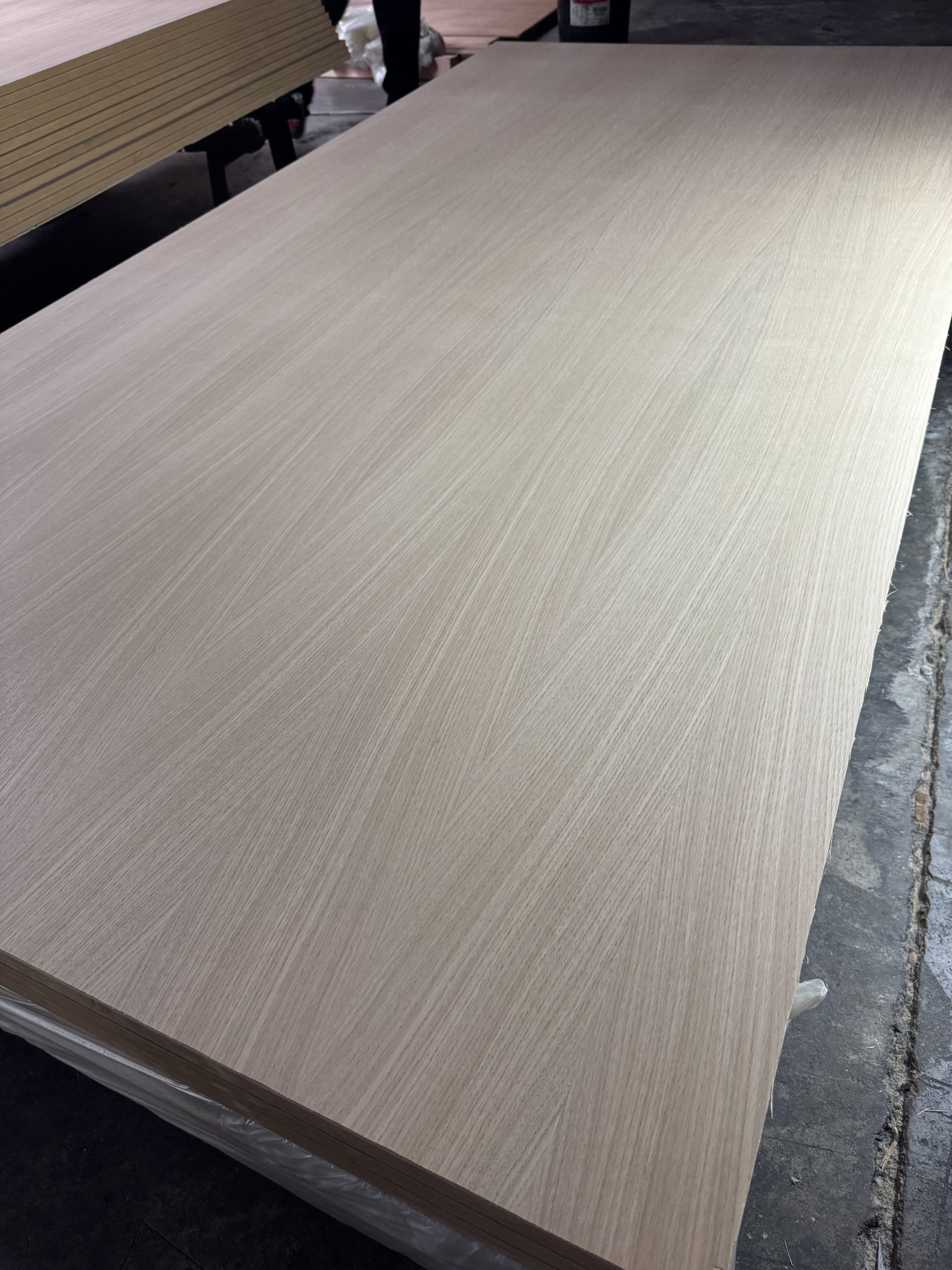
White oak exhibits light tan to medium brown heartwood with prominent medullary rays creating distinctive “flake” patterns when quarter-sawn. These ray flecks appear as lighter streaks perpendicular to grain direction, adding visual interest absent in walnut. Red oak shows warmer, pinkish-brown tones with similar ray patterns but less pronounced than white oak. Both oak species feature open grain structure requiring pore filling for smooth finishes in furniture applications.
Oak grain patterns vary dramatically based on cutting method. Plain-sawn oak displays cathedral or arched grain patterns ideal for traditional furniture styles, while quarter-sawn oak produces straight grain with prominent ray fleck for Arts & Crafts and Mission furniture. Oak’s prominent grain texture creates tactile interest but can overwhelm contemporary designs favoring clean lines—a key consideration when comparing walnut vs oak for modern furniture projects.

Hardness and Durability: Walnut vs Oak
The Janka hardness test quantifies wood resistance to denting and wear, critical for furniture longevity. Black walnut rates 1,010 lbf (pounds-force), positioning it as a medium-hardness species suitable for residential furniture, cabinetry, and decorative panels. This moderate hardness facilitates easier machining, sanding, and finishing compared to harder species, reducing manufacturing labor costs. Walnut’s density (approximately 38 lbs/ft³) provides adequate structural strength for table tops, cabinet doors, and wall panels while remaining workable with standard woodworking equipment.
White oak significantly exceeds walnut at 1,360 lbf Janka hardness, offering 35% greater dent resistance—crucial for kitchen cabinets, dining tables, and commercial furniture exposed to heavy use. Red oak rates 1,290 lbf, still surpassing walnut by 28%. This hardness advantage makes oak preferable for high-traffic applications like restaurant tables, retail fixtures, and institutional furniture. Oak’s density (approximately 47 lbs/ft³ for white oak) contributes to superior structural performance in load-bearing furniture components.
However, hardness presents trade-offs in manufacturing. Oak’s density increases tool wear and finishing complexity—the open grain structure requires additional pore-filling steps absent in walnut finishing schedules. For furniture manufacturers prioritizing production efficiency and refined aesthetics over maximum durability, walnut offers optimal balance. Commercial projects demanding extreme wear resistance justify oak’s additional processing requirements.
| Property | Black Walnut | White Oak | Red Oak |
|---|---|---|---|
| Janka Hardness | 1,010 lbf | 1,360 lbf | 1,290 lbf |
| Density | 38 lbs/ft³ | 47 lbs/ft³ | 44 lbs/ft³ |
| Stability | Good | Excellent | Good |
| Workability | Excellent | Good | Good |
Walnut vs Oak Price Comparison
Material cost represents the most significant difference when comparing walnut vs oak for furniture manufacturing. Black walnut lumber typically costs $8-14 per board foot for FAS (Firsts and Seconds) grade, while white oak ranges $4-7 per board foot and red oak $3-5 per board foot for equivalent grades. This 60-100% price premium for walnut directly impacts finished furniture pricing and target market positioning.
Walnut veneer costs similarly exceed oak pricing. Natural black walnut veneer (0.6mm thickness) wholesales at $15-25 per square meter, compared to white oak veneer at $8-14 per square meter and red oak at $6-10 per square meter. For large-scale furniture manufacturing using veneered plywood, these differences compound significantly—a walnut veneered plywood panel (4x8ft, 18mm thickness) costs approximately $85-120 wholesale, while comparable oak veneered panels cost $45-65.
The price disparity reflects supply dynamics and growth characteristics. Walnut trees mature slowly (60-80 years to harvest size) and face declining natural forest availability, constraining supply. Oak’s faster growth (40-60 years) and widespread plantation cultivation ensure abundant supply at lower costs. For furniture manufacturers, walnut justifies premium pricing through luxury positioning, while oak enables competitive pricing in mass-market segments.
When sourcing from plywood manufacturers in China, buyers can negotiate volume discounts reducing effective costs by 15-25% for container orders (500+ panels). However, the proportional cost difference between walnut and oak remains consistent regardless of supplier location, making species selection primarily a market positioning decision rather than manufacturing efficiency consideration.

Walnut vs Oak for Furniture Applications
Application requirements determine optimal wood selection between walnut and oak. Each species excels in specific furniture categories based on performance characteristics and aesthetic expectations.
Walnut vs Oak Kitchen Cabinets
Kitchen cabinetry demands durability, moisture resistance, and aesthetic appeal—areas where walnut vs oak comparison reveals distinct trade-offs. Walnut cabinets command luxury kitchen markets with rich color and refined grain complementing contemporary and transitional designs. The species’ moderate hardness suffices for cabinet door and drawer front applications, though some manufacturers prefer oak for cabinet boxes subjected to hardware installation stress.
Oak dominates traditional kitchen cabinetry due to superior hardness and lower costs. White oak’s closed cellular structure provides better moisture resistance than red oak, crucial near sinks and dishwashers. The prominent grain suits traditional door profiles (raised panel, cathedral arch), while quarter-sawn white oak serves Shaker and Arts & Crafts styles. For cabinet manufacturers serving mid-market segments, oak veneered plywood offers optimal cost-performance balance at $45-65 per 4x8ft panel versus $85-120 for walnut.
Walnut vs Oak Wall Panels
Architectural wall panels prioritize visual impact over structural performance, favoring walnut’s aesthetic advantages. Interior designers specify walnut veneer panels for feature walls in residential and hospitality projects, where rich color creates focal points without heavy grain distraction. Bookmatched walnut panels deliver symmetrical patterns ideal for lobby walls, headboards, and restaurant accents.
Oak wall panels suit traditional and rustic interiors where grain prominence enhances authenticity. Quarter-sawn white oak panels with ray fleck patterns serve commercial spaces requiring durable, classic aesthetics—law offices, libraries, institutional buildings. The cost advantage ($30-40)
Comments