
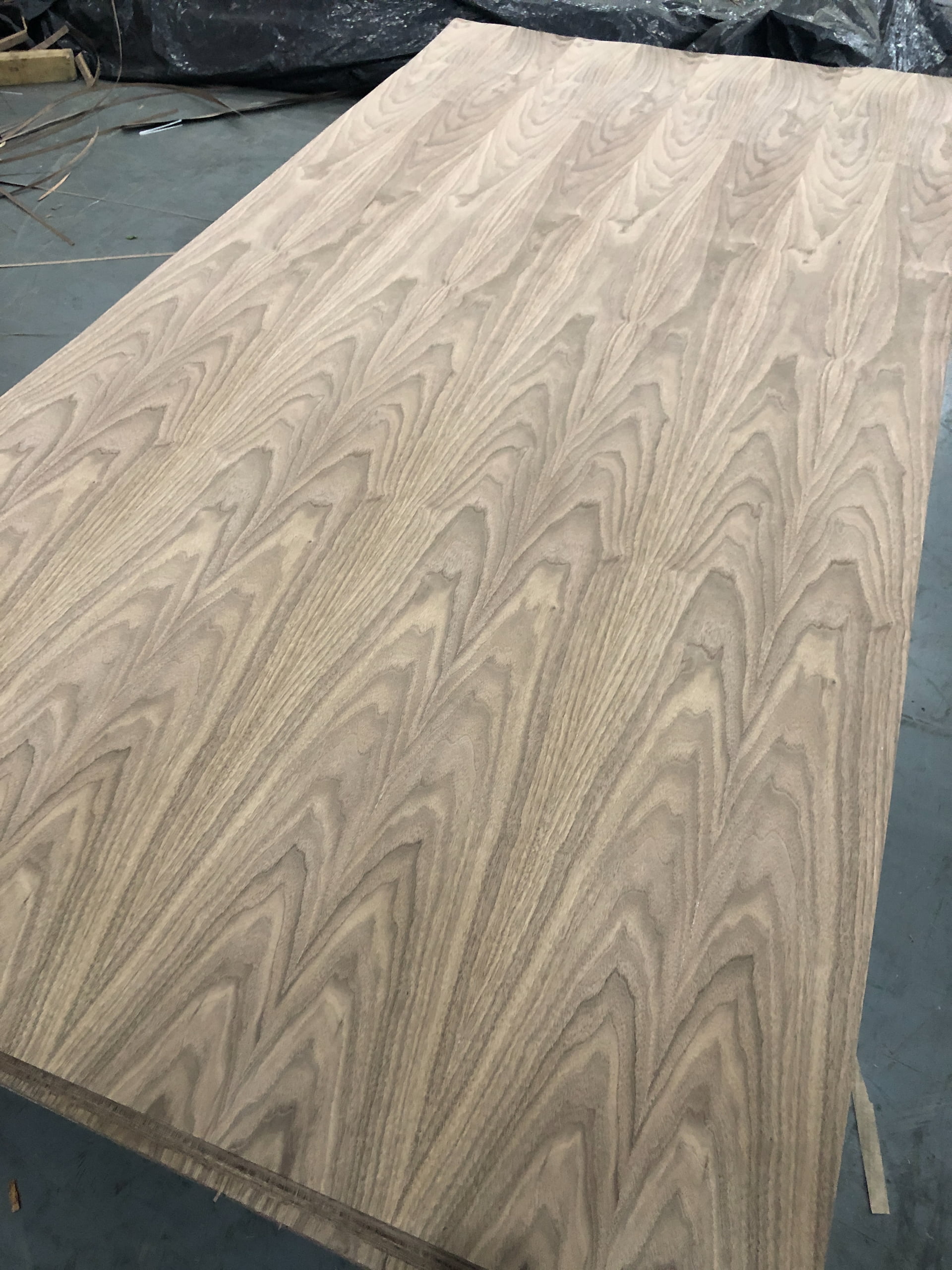
Walnut Veneer Panels Explained: Types, Construction, Applications & Quality Guide
When designing furniture, specifying cabinetry, planning architectural millwork, or selecting materials for interior wall panels, walnut veneer panels offer an exceptional combination of authentic walnut aesthetics, engineered performance, cost-effectiveness, and design flexibility. But what exactly are walnut veneer panels, how are they constructed, what types are available, and how do you select the right specifications for your specific project requirements?
This comprehensive guide explains everything you need to know about walnut veneer panels—from basic construction and component materials to veneer cutting methods, core substrate options, quality grading systems, common applications, and selection criteria. Whether you’re a furniture manufacturer evaluating material options, an interior designer specifying finishes, a cabinet maker comparing suppliers, an architect planning commercial millwork, or a contractor sourcing materials for a residential project, this guide provides the technical knowledge and practical insights you need to make informed decisions and achieve optimal project outcomes.
- What Are Walnut Veneer Panels?
- Types of Walnut Veneer Panels (By Core Material)
- Walnut Species Used in Veneer Panels
- Veneer Cutting Methods and Grain Patterns
- Common Applications for Walnut Veneer Panels
- Specifications and Standards
- Advantages of Walnut Veneer Panels
- Working with Walnut Veneer Panels
- How to Select Quality Walnut Veneer Panels
- Frequently Asked Questions
- Source Premium Walnut Veneer Panels
What Are Walnut Veneer Panels?
Walnut veneer panels are engineered wood panels consisting of a thin slice of genuine walnut wood (the veneer) permanently bonded to a stable substrate core material. Unlike solid walnut lumber cut entirely from walnut trees, veneer panels combine the visual beauty, natural grain patterns, and authentic wood character of walnut surfaces with the structural advantages, dimensional stability, and economic benefits of engineered core materials.

Basic Construction and Components
A typical walnut veneer panel consists of three primary components working together to create a high-performance architectural material:
1. Face Veneer (The Visible Surface): A thin slice of genuine walnut wood—typically ranging from 0.5mm to 1.0mm in thickness—forms the visible face of the panel. This veneer provides authentic walnut appearance including characteristic chocolate-brown to purplish-black coloring (in black walnut), natural grain patterns, figure variations, and real wood texture. The face veneer is carefully selected, processed, and applied to ensure consistent appearance, proper adhesion, and long-term durability.
2. Core Substrate (The Structural Foundation): The core material provides structural integrity, dimensional stability, thickness, and mechanical properties. Core options include multi-ply plywood (cross-laminated hardwood veneers), MDF (medium-density fiberboard), particleboard, blockboard, or specialized composite materials. Core selection significantly impacts panel weight, strength, screw-holding capacity, moisture resistance, machinability, and cost—making it a critical specification decision.
3. Back Veneer (The Balance Layer): High-quality walnut veneer panels typically include a backing veneer on the reverse face to balance moisture absorption characteristics and minimize warping or twisting. The back veneer may be the same walnut species (for premium applications where both faces are visible), a less expensive hardwood species (poplar, birch), or occasionally a specialized balancing material. Single-face economy panels may use paper or no backing, but these are more susceptible to dimensional instability.
Adhesive Systems: Modern walnut veneer panels use advanced adhesives—typically urea-formaldehyde, phenol-formaldehyde, or increasingly, formaldehyde-free alternatives (MDI-based or soy-based adhesives)—to permanently bond veneer to substrate. Quality adhesive application ensures veneer doesn’t delaminate, bubble, or separate under normal use conditions, temperature variations, or humidity changes.
How Walnut Veneer Panels Differ from Solid Wood
Understanding the fundamental distinctions between walnut veneer panels and solid walnut lumber clarifies when each material type offers optimal performance:
Solid Walnut Lumber: Boards cut entirely from walnut trees, showing walnut wood throughout the entire thickness. Solid lumber can be extensively sanded, shaped, routed, carved, and refinished multiple times since walnut extends through the full depth. Solid wood is ideal for legs, frames, moldings, edge profiles, turned components, and applications requiring exposed edges or heavy machining. However, solid walnut is expensive (typically $12-$25+ per board foot depending on grade and width), limited in available widths (boards wider than 12-14″ require edge-gluing), and naturally unstable dimensionally—expanding and contracting seasonally as moisture content changes with humidity.
Walnut Veneer Panels: Engineered panels with walnut appearance on the surface only (typically 0.5-1.0mm deep). Much more cost-effective for large surface areas—often providing 50-70% cost savings versus solid walnut when calculating coverage per square foot. Available in large panel sizes (standard 4’×8′ sheets, up to 5’×12′ or larger) without edge-gluing, and dimensionally stable due to engineered core construction that resists warping, cupping, and seasonal movement. However, the thin veneer layer limits how deeply you can sand or shape surfaces (typically no more than 0.2-0.3mm sanding depth), edges show core material requiring edge banding or solid wood trim, and damage that penetrates the veneer exposes the substrate underneath.
Strategic Combination: Professional furniture manufacturers and custom cabinet shops typically combine both materials strategically—using solid walnut for frames, legs, rails, stiles, edge profiles, and detailed components where workability and exposed edges justify premium costs, while employing walnut veneer panels for large surfaces, cabinet boxes, door panels, drawer fronts, and applications where stability, cost-effectiveness, and consistent appearance are priorities.
Why Choose Walnut Veneer Panels
Several compelling advantages make walnut veneer panels the preferred choice for many furniture, cabinetry, and architectural applications:
Cost-Effectiveness: Veneer panels deliver authentic walnut appearance at 40-70% lower material cost versus solid walnut lumber when calculating coverage per square foot. One walnut log can produce significantly more veneer surface area than solid boards, making walnut beauty accessible for budget-conscious projects without sacrificing visual quality.
Large Panel Availability: Standard 4’×8′ sheet sizes (and larger formats up to 5’×12′ or custom dimensions) eliminate the need for edge-gluing narrower boards to achieve width, reducing labor, improving appearance consistency, and simplifying fabrication workflows.
Dimensional Stability: Engineered core construction—particularly cross-grain plywood cores and homogeneous MDF cores—resists warping, cupping, twisting, and seasonal expansion/contraction that affects solid lumber. Panels remain flat and stable across humidity variations and temperature changes.
Consistent Appearance: Veneer manufacturing processes enable better control over color consistency, grain pattern matching, and surface uniformity versus solid lumber which shows natural variation. Book-matching and slip-matching techniques create symmetrical, aesthetically pleasing grain patterns difficult to achieve with solid wood.
Sustainability: Veneering maximizes yield from each
Comments