
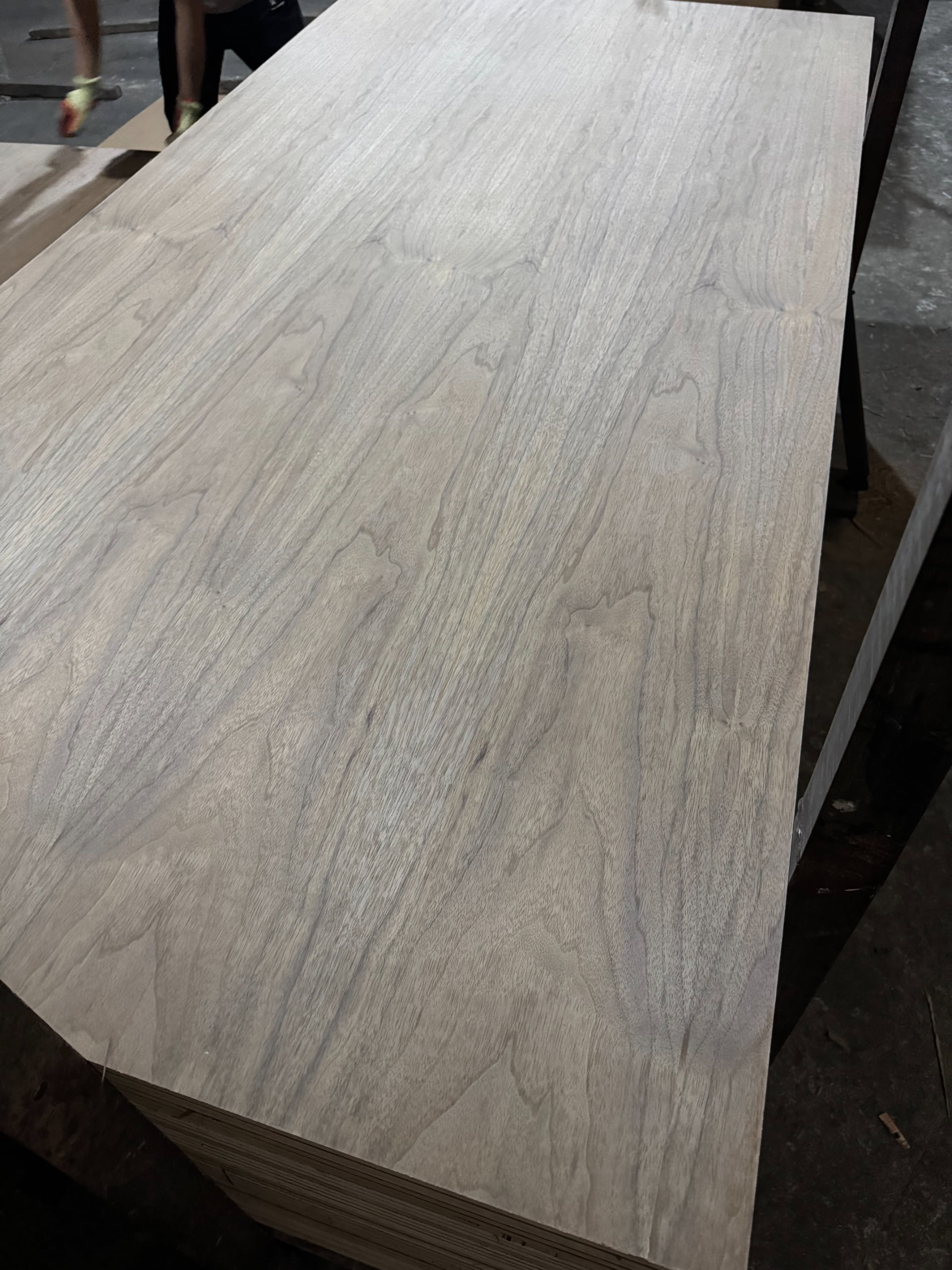
Walnut MDF vs Walnut Plywood: Complete Comparison Guide (Strength, Cost, Applications)
When specifying materials for furniture projects, kitchen cabinets, custom millwork, or interior design applications requiring walnut’s premium aesthetic, you’ll encounter two primary options: walnut MDF and walnut plywood. While both materials deliver the rich chocolate-brown appearance of genuine walnut veneer surfaces, their core construction differences create significant performance, cost, and application distinctions that directly impact project success, longevity, and budget.
This comprehensive comparison guide examines walnut MDF vs walnut plywood across all critical decision factors—core construction, strength characteristics, weight, workability, moisture resistance, cost, and ideal applications. You’ll learn exactly how these materials differ, what advantages each offers, which limitations to consider, and most importantly, how to select the optimal material for your specific project requirements. Whether you’re a furniture manufacturer optimizing production costs, a cabinet maker evaluating material performance, an interior designer specifying millwork, or a contractor comparing options for a client project, this guide provides the technical clarity and practical insights you need.
- Understanding Walnut MDF and Walnut Plywood
- Core Construction Differences
- Key Performance Comparisons
- Workability and Fabrication
- Cost Comparison: Walnut MDF vs Walnut Plywood
- Best Applications for Each Material
- Pros and Cons Summary
- How to Decide Between Walnut MDF and Walnut Plywood
- Frequently Asked Questions
- Need Help Choosing? Contact Our Team
Understanding Walnut MDF and Walnut Plywood
Before diving into detailed comparisons, let’s establish clear definitions of both materials and identify what they share in common versus where critical differences exist.

What Is Walnut MDF?
Walnut MDF (Medium-Density Fiberboard with walnut veneer) consists of a thin walnut wood veneer face—typically 0.5mm to 1.0mm thick—bonded to an engineered MDF core substrate. The MDF core is manufactured by breaking down hardwood or softwood residuals into wood fibers, combining these fibers with wax and resin binder, and forming them into panels using high temperature and pressure.
Core Characteristics: The MDF core creates a uniform, dense substrate without grain direction, knots, voids, or internal layers. Density typically ranges from 680-820 kg/m³ (42-51 lbs/ft³), significantly denser than most plywood constructions. This density produces exceptionally smooth surfaces ideal for veneer adhesion and finishing, while the homogeneous composition enables consistent machining characteristics without tearout or grain-related defects.
Typical Specifications:
- Face veneer: 0.5-1.0mm walnut (usually black walnut)
- Core: MDF ranging from E1 to E0 emission standards
- Standard sizes: 4’×8′ (1220×2440mm), 5’×8′ (1525×2440mm)
- Common thicknesses: 12mm, 15mm, 18mm, 25mm
- Veneer application: Single-face or double-face options
What Is Walnut Plywood?
Walnut plywood features the same thin walnut veneer face (0.5-1.0mm) bonded to a multi-layer plywood core constructed from cross-laminated wood veneers. The plywood core consists of multiple thin wood layers (typically 3 to 13 plies) oriented with alternating grain directions—each layer’s grain running perpendicular to adjacent layers.
Core Characteristics: The cross-grain construction provides superior dimensional stability, strength-to-weight ratio, and resistance to warping compared to solid wood. Core veneers are usually poplar, birch, eucalyptus, or other hardwoods selected for structural performance and cost-effectiveness. Density ranges from 500-650 kg/m³ (31-40 lbs/ft³), lighter than MDF while maintaining excellent strength characteristics.
Typical Specifications:
- Face veneer: 0.5-1.0mm walnut (black walnut or European walnut)
- Core: Hardwood multi-ply (poplar, birch, eucalyptus common)
- Standard sizes: 4’×8′ (1220×2440mm), 5’×8′ (1525×2440mm)
- Common thicknesses: 12mm, 15mm, 18mm, 25mm
- Ply count: 3-ply (thin panels) to 13-ply (thick panels)
- Veneer application: Single-face or double-face options
The Common Ground: Walnut Veneer Face
Critically, both walnut MDF and walnut plywood present identical surface appearance—genuine walnut wood veneer with characteristic chocolate-brown color, natural grain patterns, and authentic wood texture. From the face perspective, properly manufactured versions of either material are virtually indistinguishable. Both accept stains, clear finishes, and surface treatments identically since you’re working with real walnut wood surfaces in either case.
This appearance equivalence means aesthetic considerations don’t drive material selection—the decision hinges entirely on core performance characteristics, application requirements, workability factors, and cost considerations. Understanding these underlying differences, rather than surface similarities, guides optimal material choices.
Core Construction Differences
The fundamental distinction between walnut MDF vs walnut plywood lies in core substrate composition and construction methods. These structural differences create cascading effects on performance, workability, and application suitability.

MDF Core Composition and Characteristics
MDF cores are engineered composite materials manufactured through fiber processing:
Manufacturing Process: Wood residuals (sawmill waste, wood chips, recycled wood) are broken down into individual wood fibers through mechanical refining or steam explosion. These fibers are dried, combined with adhesive resins (typically urea-formaldehyde, phenol-formaldehyde, or formaldehyde-free alternatives) and wax for moisture resistance, then formed into mats and pressed under high heat and pressure (typically 180-220°C and 3-5 MPa) to create solid panels.
Structural Properties:
- Homogeneous composition: No grain direction, layers, or internal voids—uniform properties throughout thickness
- High density: Compact fiber packing creates density of 680-820 kg/m³, heavier than most plywood
- Smooth surfaces: Fine fiber particles produce exceptionally smooth faces ideal for veneer bonding
- Consistent machining: No grain tearout, splintering, or directional cutting behavior
- Isotropic strength: Similar strength in all directions (though lower absolute strength than plywood)
Adhesive Considerations: MDF formaldehyde emissions have historically been environmental concerns, but modern low-emission formulations (E1, E0, CARB P2 compliant) minimize off-gassing. Formaldehyde-free MDF using MDI (methylene diphenyl diisocyanate) or other alternative binders is increasingly available for health-sensitive applications.
Plywood Core Composition and Characteristics
Plywood cores employ cross-laminated veneer construction:
Manufacturing Process: Logs are rotary-cut or sliced into thin veneers (typically 1.2-3.2mm thick depending on position in panel). These veneers are dried to controlled moisture content, graded for quality, and assembled in alternating grain-direction layers. Adhesive is applied between layers, and the assembly is hot-pressed (typically 100-140°C and 1.0-1.5 MPa for shorter duration than MDF) to create bonded multi-layer panels.
Comments