
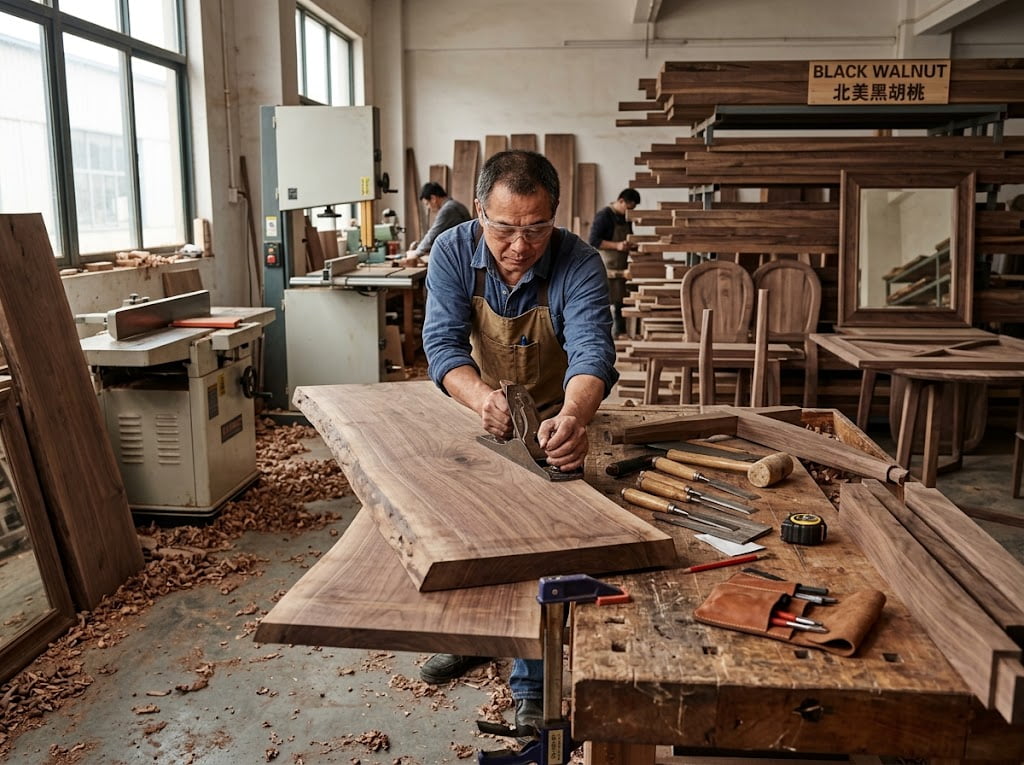
Complete Walnut Furniture Manufacturing Guide: Process, Techniques & Quality Standards (2024)
From elegant dining tables and executive desks to premium bedroom sets and contemporary cabinetry, walnut furniture represents the pinnacle of quality craftsmanship and timeless design in the global furniture market. Whether you’re a furniture manufacturer evaluating materials for a new product line, a production manager optimizing factory processes, a woodworker expanding into commercial production, or a designer specifying materials for custom furniture projects, understanding professional walnut furniture manufacturing processes, techniques, quality standards, and best practices is essential for producing pieces that meet market expectations while maintaining profitability.
Unlike softer woods or engineered alternatives, walnut furniture manufacturing requires specialized knowledge spanning material selection, conditioning, precision joinery, veneer application, finishing techniques, and quality control—each stage presenting unique technical considerations that directly impact the final product’s appearance, durability, and market value. This comprehensive walnut furniture manufacturing guide walks you through the complete production process from raw lumber selection to finished product inspection, covering material preparation, cutting and dimensioning, traditional and modern joinery techniques, veneer applications, assembly methods, sanding procedures, finishing options, essential equipment, common challenges and solutions, efficiency optimization, safety protocols, and sustainable practices—providing the technical depth and practical insights needed to manufacture premium walnut furniture that commands top-tier pricing in residential, commercial, and contract markets.
- Why Walnut is Premium Choice for Furniture Manufacturing
- Types of Walnut for Furniture Manufacturing
- Material Selection and Sourcing
- Wood Preparation and Conditioning
- Design and Planning Phase
- Cutting and Dimensioning
- Joinery Techniques for Walnut Furniture
- Veneer Application for Walnut Furniture
- Assembly Process
- Sanding and Surface Preparation
- Finishing Techniques for Walnut Furniture
- Quality Control and Inspection
- Essential Equipment for Walnut Furniture Manufacturing
- Common Challenges in Walnut Furniture Manufacturing
- Manufacturing Efficiency and Cost Control
- Safety Considerations in Walnut Furniture Manufacturing
- Sustainable Walnut Furniture Manufacturing
- Frequently Asked Questions
- Partner with Professional Walnut Furniture Manufacturer
Why Walnut is Premium Choice for Furniture Manufacturing
Among hundreds of commercial hardwood species available to furniture manufacturers worldwide—from oak and maple to cherry and mahogany—walnut consistently commands premium pricing and consumer preference due to a unique combination of aesthetic, physical, and market characteristics that few other woods can match. Understanding what makes walnut exceptional helps manufacturers justify the higher material costs and capitalize on walnut furniture’s superior market positioning.

Aesthetic Appeal and Grain Characteristics
The primary driver of walnut’s premium status in furniture manufacturing is its exceptional visual appeal—American Black Walnut exhibits rich chocolate-brown heartwood with darker purplish-black streaks, dramatic grain patterns ranging from straight to highly figured burls and crotches, and natural color variation that creates depth and visual interest without requiring stains or dyes. Unlike lighter woods that may appear bland or require artificial coloring, walnut’s inherent richness provides instant sophistication that resonates with consumers seeking luxury and quality.
The grain characteristics of walnut wood offer furniture manufacturers significant design flexibility—straight-grained sections provide clean modern aesthetics ideal for contemporary furniture lines, while figured sections featuring burls, curls, and swirls create statement pieces that command premium pricing. Manufacturers can strategically select and position walnut boards to either emphasize dramatic grain for focal-point furniture or use consistent straight grain for uniform production pieces, giving control over aesthetic positioning within product portfolios.
Comments