
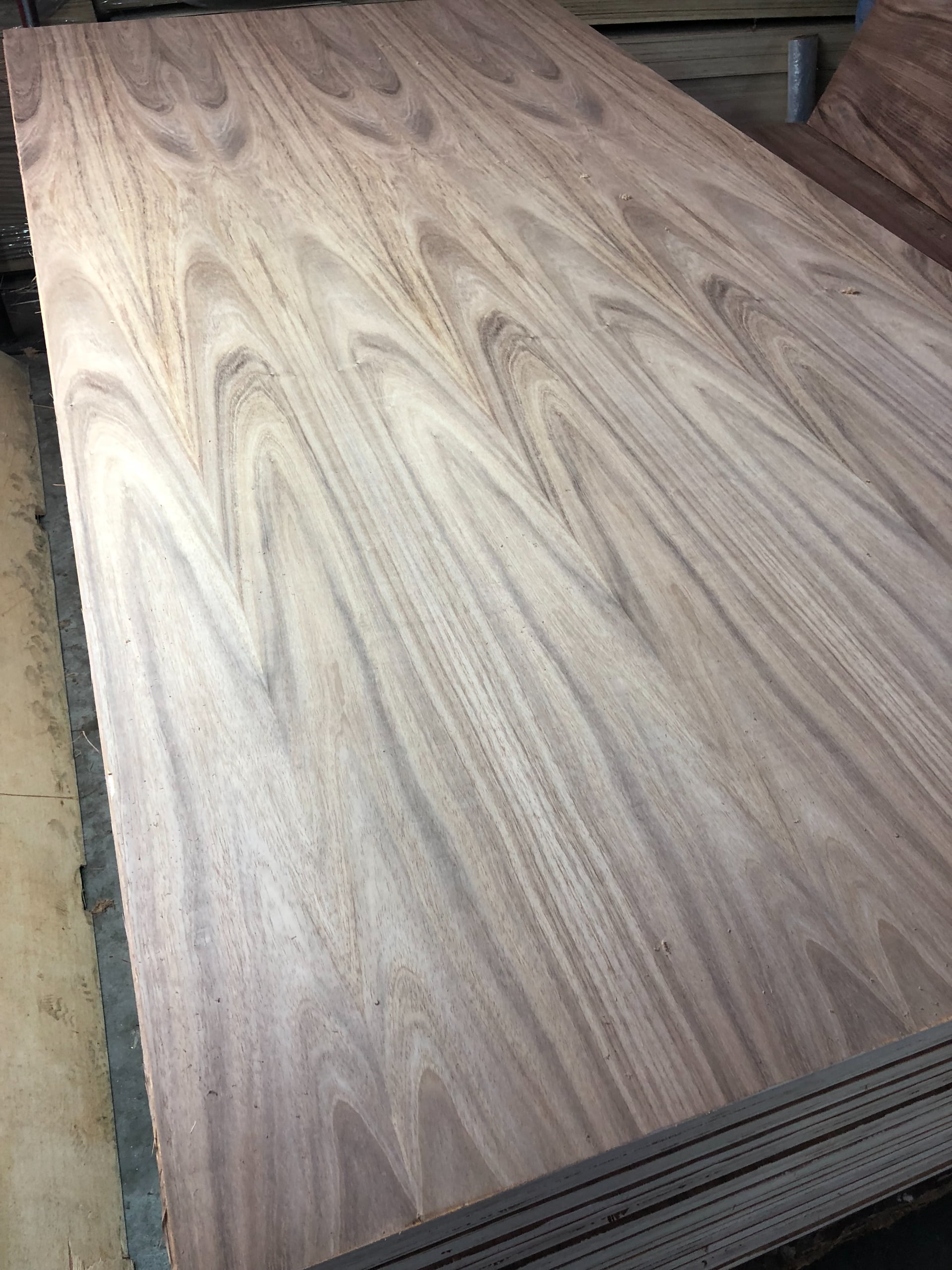
# Tzalam Plywood Supplier In China: Complete Sourcing Guide For Importers, Distributors, And Trade Professionals Seeking Reliable Manufacturing Partners
For **importers building Latin American hardwood product lines, distributors expanding premium plywood offerings, wholesalers seeking competitive-priced decorative panels, furniture manufacturers requiring consistent tzalam veneer supply, cabinet makers sourcing authentic Mexican hardwood materials, millwork contractors specifying tropical hardwood plywood, architects and designers seeking sustainable exotic wood panels, construction material buyers evaluating new species, purchasing managers negotiating international supply agreements, retail buyers developing specialty wood product categories, and trade professionals** navigating the complexities of **Chinese wood panel manufacturing, international logistics, quality assurance protocols, and cross-border procurement**—the fundamental challenge isn’t simply *finding any supplier claiming tzalam plywood capability* or *accepting the first quotation received*—it’s **identifying genuinely capable manufacturers with proven veneer sourcing networks, technical production expertise, quality control systems, export documentation capabilities, and customer service infrastructure** while avoiding the critical traps of **working with trading companies misrepresenting manufacturing capabilities, suppliers lacking direct access to authentic tzalam veneer, manufacturers with inadequate quality systems producing inconsistent products, inexperienced exporters creating logistics nightmares, unrealistic pricing that signals material substitution risks, poor communication causing specification misunderstandings, and inadequate sampling protocols** that fail to reveal quality issues before full production commitment. **China’s position as the world’s largest plywood manufacturer combined with Mexico’s tzalam resources**—representing a **strategic convergence of specialized veneer sourcing expertise, advanced panel manufacturing technology, cost-competitive production structures, and established export infrastructure**—creates unique opportunities for **knowledgeable buyers who understand how to identify legitimate manufacturers, verify production capabilities, establish quality assurance systems, and structure procurement relationships** that deliver consistent value.
Whether you’re an **importer** establishing new product lines targeting North American or European markets, **distributor** responding to customer requests for authentic Mexican hardwood panels, **wholesaler** seeking differentiated products in competitive markets, **furniture manufacturer** requiring reliable tzalam plywood supply for production programs, **cabinet maker** sourcing materials for custom or semi-custom lines, **millwork contractor** specifying plywood for commercial or high-end residential projects, **architect or designer** seeking sustainable certified tropical hardwood options, **flooring contractor** evaluating engineered flooring core materials, **door manufacturer** assessing flush door skin applications, **construction buyer** sourcing materials for multi-unit developments, **exhibition fabricator** requiring specialty wood panels, **retail buyer** developing inventory for lumberyards or specialty stores, **purchasing agent** managing international procurement for multiple clients, **quality manager** establishing supplier qualification systems, **logistics coordinator** managing import/export operations, or **business development professional** evaluating Chinese manufacturing partnerships—understanding **manufacturer identification strategies, capability verification methods, quality assurance frameworks, pricing structures and negotiation approaches, specification communication protocols, sampling and testing procedures, logistics and documentation requirements, risk management strategies, relationship development best practices, and market intelligence** transforms tzalam plywood sourcing from **risky international procurement into systematic supply chain development** that delivers consistent quality, competitive pricing, and long-term partnership value.
Most professionals enter Chinese tzalam plywood sourcing through **reactive scenarios**—responding to customer inquiries, exploring cost reduction opportunities, seeking alternatives to domestic suppliers, encountering products at trade shows, receiving unsolicited supplier contacts, researching specialty hardwood panel options, or following recommendations from industry contacts—and initially make expensive mistakes: **accepting supplier self-representations without verification, inadequate due diligence on manufacturing capabilities, poor specification communication leading to quality mismatches, unrealistic price expectations driving supplier selection, insufficient sampling protocols, inadequate quality control systems, poor understanding of Chinese manufacturing culture and practices, logistics planning failures, documentation errors causing customs delays, inadequate payment term protection, and relationship management failures** that undermine long-term supply stability.
This comprehensive sourcing guide addresses every critical question professionals must answer: **How do you identify legitimate tzalam plywood manufacturers versus trading companies? What verification questions reveal true production capabilities? How do Chinese manufacturers source authentic tzalam veneer? What quality standards should you specify? How do pricing structures work? What are realistic lead times? What sampling protocols ensure quality alignment? How do you structure initial orders to minimize risk? What payment terms protect both parties? How do you establish effective communication? What quality control systems work across international distances? How do you manage logistics and documentation? What relationship development practices create long-term partnerships? What red flags indicate problematic suppliers?**
—
## Section 1: Understanding The Chinese Tzalam Plywood Manufacturing Landscape
### China’s Wood Panel Industry Context
**Global Manufacturing Position**
**Production Scale:**
– **Plywood output:** China produces approximately 100+ million cubic meters annually (>50% of global production)
– **Export volume:** Major exporter to North America, Europe, Middle East, Southeast Asia, Africa, Latin America
– **Manufacturing concentration:** Primary production centers in Shandong, Jiangsu, Hebei, Guangdong provinces
– **Technology level:** Ranges from basic operations to world-class automated facilities
**Competitive Advantages:**
– **Scale economies:** Massive production volumes drive cost efficiency
– **Supply chain integration:** Established networks for veneer sourcing, adhesives, hardware, logistics
– **Manufacturing expertise:** Decades of experience in decorative hardwood plywood production
– **Labor cost structure:** Still competitive despite wage increases
– **Infrastructure:** Excellent export logistics infrastructure (ports, freight forwarding, documentation services)
**Quality Spectrum:**
– **Reality:** Chinese manufacturers span enormous quality range
– **High-end producers:** Deliver products meeting European E1/E0, CARB Phase 2, JAS standards
– **Mid-tier producers:** Adequate quality for many commercial applications
– **Low-end producers:** Cost-focused operations with minimal quality control
– **Buyer responsibility:** Due diligence critical to identify appropriate tier for requirements
—
**Specialty Hardwood Plywood Capabilities**
**Tropical/Exotic Species Expertise:**
Chinese manufacturers have developed substantial capabilities in working with tropical and exotic hardwoods for several reasons:
**Market-Driven Development:**
– **Export demand:** International markets (especially Europe, North America, Middle East) demand diverse decorative species
– **Latin American connections:** Established relationships with veneer suppliers in Mexico, Central America, South America
– **African hardwood experience:** Extensive work with African species (sapele, okoume, mahogany, etc.)
– **Asian tropical species:** Access to regional species (teak, meranti, acacia, etc.)
**Technical Capabilities:**
– **Veneer processing:** Advanced machinery for slicing, drying, grading exotic veneers
– **Pressing technology:** Hot press capabilities suitable for tropical hardwood density variations
– **Adhesive expertise:** Experience with adhesive systems appropriate for dense tropical woods
– **Finishing capabilities:** Surface finishing (sanding, UV coating, melamine overlay) suitable for decorative panels
**Tzalam-Specific Context:**
**Veneer Sourcing:**
– **Mexican origin:** Authentic tzalam veneer sourced from Mexican suppliers or through Central American networks
– **Import logistics:** Chinese manufacturers import container loads of tzalam veneer (rotary-cut or sliced)
– **Inventory management:** Larger manufacturers maintain veneer inventory; smaller rely on project-based sourcing
– **Quality variability:** Veneer quality depends on supplier relationships and purchasing standards
**Production Experience:**
– **Growing familiarity:** Tzalam production increasing as Mexican hardwood demand grows
– **Learning curve:** Manufacturers experienced with similar tropical species adapt readily
– **Volume threshold:** Most manufacturers require minimum order quantities to justify veneer sourcing
– **Specification flexibility:** Capable of various core constructions, thicknesses, grades
—
### Manufacturer Categories and Identification
**Factory Types: Understanding Who You’re Dealing With**
**1. Integrated Manufacturers (Direct Factories)**
**Characteristics:**
– **Own production facilities:** Factory buildings, machinery, workforce
– **Raw material processing:** May process logs to veneer; definitely process purchased veneer
– **Quality control:** Internal QC departments and testing laboratories
– **Production capacity:** Typically 1,000-10,000+ cubic meters/month depending on scale
– **Export capabilities:** Export licenses, documentation teams, logistics coordination
– **Investment level:** Significant capital investment in facilities and equipment
**Advantages for Buyers:**
– **Direct pricing:** No trading company markup
– **Production control:** Ability to influence production scheduling, quality standards
– **Technical communication:** Access to production managers and technical staff
– **Quality assurance:** Can implement buyer-specific QC protocols
– **Transparency:** Factory visits possible; verify capabilities directly
– **Customization:** Greater flexibility for special specifications
**Identification Methods:**
– **Factory address verification:** Google Maps/satellite imagery should show industrial buildings
– **Business license verification:** Chinese business registration documents show manufacturing scope
– **Production equipment evidence:** Request photos/videos of production lines, press machines, finishing equipment
– **Production capacity documentation:** Ask for monthly output figures with evidence
– **Quality certifications:** FSC, ISO 9001, CARB, CE certifications in factory name (not trading company name)
– **Video factory tour:** Request live video walkthrough showing tzalam veneer inventory, pressing operations, finishing
**Red Flags:**
– Office address only (no factory address provided)
– Reluctance to provide factory tour or detailed production photos
– Cannot answer detailed technical production questions
– Certifications in different company name
– Vague responses about equipment and capacity
—
**2. Trading Companies**
**Characteristics:**
– **No production facilities:** Office operations only
– **Intermediary role:** Source products from multiple factories
– **Market knowledge:** Often strong market intelligence and customer relationships
– **Service focus:** Handle documentation, logistics, quality coordination
– **Flexibility:** Can source from different factories for different products/specifications
– **Commission structure:** Add markup (typically 5-15%) to factory pricing
**Legitimate Trading Company Advantages:**
– **Multiple factory access:** Can match buyer needs to appropriate factory
– **English proficiency:** Often better communication than factories
– **Experience:** Knowledgeable about export requirements, international standards
– **Problem-solving:** Buffer between buyer and factory; can resolve issues
– **Consolidation:** Can combine products from multiple factories in single shipment
– **Market intelligence:** Provide insights on pricing trends, capacity, new products
**Risks and Disadvantages:**
– **Price markup:** Higher cost than direct factory sourcing
– **Quality control challenges:** Less direct control over production
– **Factory transparency:** May resist revealing actual manufacturing source
– **Accountability:** Additional layer complicates problem resolution
– **Switching risk:** May change factories without notice if pricing/capacity issues arise
– **Technical limitations:** May lack deep production knowledge
**When Trading Companies Make Sense:**
– **Small order quantities:** Factories may have high minimums; trading companies aggregate smaller orders
– **Multiple products:** Sourcing diverse products from single contact point
– **First-time importers:** Trading company provides guidance and documentation support
– **Testing market:** Lower commitment way to evaluate products before direct factory relationship
– **Complex logistics:** Trading company handles consolidation, customs, documentation
**Identification:**
– Business registration shows “trading” or “import-export” as primary business scope
– Office in commercial building (not industrial zone)
– Represent multiple product categories beyond wood panels
– Cannot provide detailed production process information
– Reluctant to arrange factory visits or provide factory details
—
**3. Factory-Affiliated Trading Companies**
**Hybrid Model Characteristics:**
– **Factory ownership:** Trading company owned by or closely affiliated with manufacturing factory
– **Strategic purpose:** Separate export/sales entity from production entity (common Chinese structure)
– **Shared management:** Key personnel overlap between trading company and factory
– **Integrated operations:** Trading company office may be adjacent to or within factory premises
– **Quality alignment:** Trading company incentivized to protect factory reputation
**Advantages:**
– **Near-direct pricing:** Minimal markup (typically 3-8%)
– **Factory access:** Can arrange factory visits, production oversight
– **Technical expertise:** Staff understand production capabilities and limitations
– **English communication:** Trading company staff often have better language skills than factory personnel
– **Problem resolution:** Direct connection to factory decision-makers
– **Flexibility:** Can often accommodate special requests more easily than independent trading companies
**Identification:**
– Business registration shows relationship (shared addresses, related party disclosures)
– Trading company and factory have similar names (e.g., “Linyi Huayu Wood Co., Ltd.” and “Linyi Huayu Trading Co., Ltd.”)
– Staff can provide detailed factory information and arrange immediate visits
– Certifications may be in factory name; trading company handles export documentation
– Transparent about relationship when asked directly
**Optimal Approach:**
– Verify factory capabilities as you would with direct manufacturer
– Evaluate trading company’s service value (communication, documentation, logistics)
– Negotiate pricing considering relationship structure
– Ensure quality control protocols apply to factory production
—
**4. Manufacturers with In-House Tzalam Veneer Production**
**Rare But Valuable:**
Some Chinese manufacturers have invested in tropical hardwood veneer processing capabilities:
**Characteristics:**
– **Veneer mill operations:** Import logs; process to veneer in-house
– **Species specialization:** Focus on specific tropical species (may include tzalam)
– **Vertical integration:** Control from log procurement through finished plywood
– **Quality control:** Greater control over veneer grading and quality
– **Cost efficiency:** Eliminate veneer supplier markup
**Advantages:**
– **Veneer quality control:** Select log quality; control slicing/drying processes
– **Consistency:** Better batch-to-batch consistency
– **Flexibility:** Can optimize veneer thickness, cutting orientation for specific applications
– **Cost:** Potential cost advantages on larger volumes
– **Supply stability:** Less dependent on external veneer suppliers
**Identification:**
– Production photos show log yards, veneer slicing equipment, veneer dryers
– Discuss log sourcing relationships (Mexican suppliers for tzalam)
– Explain veneer processing capabilities in detail
– Can provide information about log grades, cutting methods, drying protocols
**Considerations:**
– **Minimum volumes:** May require larger order quantities to justify log processing
– **Species focus:** May limit species range to their veneer processing specialization
– **Lead times:** Log importing and veneer processing may extend lead times
—
## Section 2: Manufacturer Identification and Verification Strategies
### Initial Research and Screening
**Finding Potential Suppliers**
**1. B2B Platforms**
**Alibaba.com:**
– **Coverage:** Largest B2B platform; thousands of plywood suppliers
– **Search terms:** “tzalam plywood”, “exotic hardwood plywood”, “tropical wood plywood”, “decorative hardwood plywood”
– **Filtering:** Use filters for “Gold Supplier”, “Verified Manufacturer”, “Trade Assurance”
– **Caution:** Verification systems have limitations; conduct independent verification
– **Useful features:** Supplier response time, transaction data (if available), company profile depth
**Approach:**
– Review company profiles for production facility photos, certifications, years in business
– Check product range (extremely broad range may indicate trading company)
– Note response quality and speed (professional communication important)
– Request factory information upfront (address, capacity, equipment)
**Made-in-China.com:**
– **Alternative platform:** Smaller than Alibaba but many legitimate manufacturers
– **Similar approach:** Search exotic hardwood plywood; evaluate supplier profiles
– **Advantages:** Sometimes less competition for buyer attention; more responsive suppliers
**Global Sources:**
– **Focus:** Export-oriented manufacturers
– **Verification:** Platform conducts some supplier verification
– **Trade shows:** Global Sources organizes trade shows; potential for face-to-face meetings
—
**2. Direct Web Search and Company Websites**
**Google Search Strategy:**
– **Search terms:** “China tzalam plywood manufacturer”, “Shandong plywood factory tropical hardwood”, “Linyi exotic wood plywood exporter”
– **Geographic focus:** Include major production regions (Linyi, Jiangsu, Guangdong)
– **Evaluation:** Companies with professional websites, English content, detailed product information signal export orientation
– **Contact:** Direct inquiry to companies with strong web presence
**Website Evaluation Checklist:**
– □ Professional English website (indicates export focus and investment in international business)
– □ Factory photos showing production equipment
– □ Product galleries including tropical/exotic species
– □ Certification documentation (download and verify)
– □ Physical address listed (verify via mapping tools)
– □ Export market information
– □ Technical specification documents available
– □ Contact information including specific personnel (not just generic email)
—
**3. Trade Shows**
**Key Chinese Industry Events:**
**China Import and Export Fair (Canton Fair):**
– **Location:** Guangzhou, China
– **Frequency:** Twice yearly (April, October)
– **Wood Products Phase:** Typically Phase 2
– **Advantages:** Face-to-face meetings; factory representatives attend; evaluate product samples directly
– **Booth evaluation:** Booth size/quality indicates company scale and investment
**China International Furniture Fair (CIFF):**
– **Location:** Guangzhou and Shanghai
– **Focus:** Furniture and raw materials
– **Wood panel presence:** Many plywood manufacturers exhibit
**Linyi Board and Wood Products Expo:**
– **Location:** Linyi, Shandong (China’s largest plywood production region)
– **Advantage:** Direct access to major manufacturers in primary production center
– **Attendance:** Industry-focused (less consumer-oriented than Canton Fair)
**International Wood Products Fairs (Abroad):**
– Chinese manufacturers increasingly exhibit at international shows:
– **IWF (International Woodworking Fair)** – Atlanta, USA
– **AWFS (Association of Woodworking & Furnishing Suppliers)** – Las Vegas, USA
– **Ligna** –
Comments