
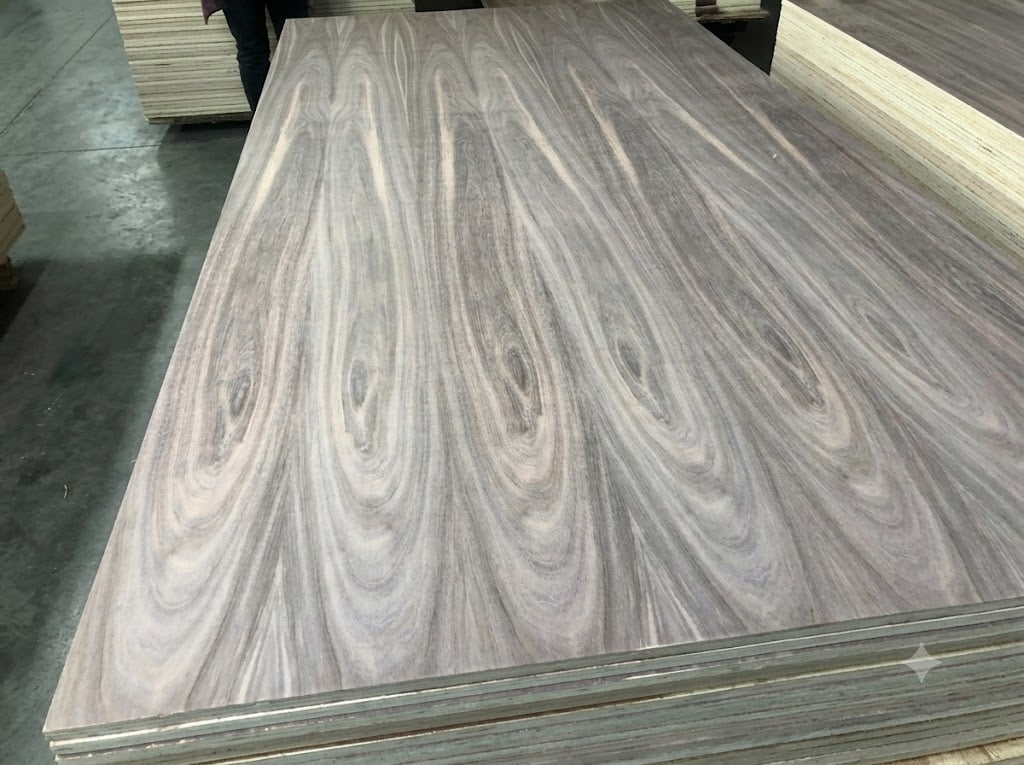
# Importing Tzalam Plywood To Mexico: Complete Guide For Distributors, Wholesalers, And Business Professionals Navigating Cross-Border Supply Chain Opportunities
For **Mexican lumber yards expanding premium plywood offerings, distributors serving furniture manufacturing clusters, wholesalers supplying cabinet makers and millwork shops, construction material importers seeking differentiated products, carpentry supply retailers developing specialty wood inventories, furniture manufacturers evaluating vertical integration opportunities, export-oriented manufacturers requiring consistent quality inputs, purchasing managers optimizing material costs, business development professionals exploring international sourcing strategies, e-commerce entrepreneurs building online wood product platforms, interior design firms seeking exclusive material sources, architectural specification writers expanding material palettes, and trade professionals** navigating the complexities of **international procurement, Chinese manufacturing relationships, customs procedures, logistics optimization, quality assurance protocols, and market positioning**—the fundamental challenge isn’t simply *finding Chinese suppliers offering tzalam plywood* or *assuming import/export is straightforward*—it’s understanding the **strategic paradox, market dynamics, technical specifications, regulatory framework, competitive landscape, and business model optimization** while avoiding the critical traps of **importing a Mexican native species that’s been processed abroad when domestic alternatives might offer advantages, inadequate market analysis revealing limited demand justification, poor understanding of Mexican customer preferences and purchasing behaviors, logistics costs eliminating competitive advantage, customs classification errors causing delays and penalties, inadequate quality control creating customer dissatisfaction, unrealistic pricing expectations, insufficient working capital for international procurement, poor supplier selection resulting in inconsistent quality, and market positioning failures** that prevent successful commercialization. **The tzalam plywood import opportunity to Mexico**—representing a **unique circular trade scenario where a Mexican native hardwood is processed internationally and reimported as finished panels**—requires sophisticated analysis of **when imports make strategic sense versus domestic sourcing, what market segments justify the complexity and cost, how to structure supply chains for competitive advantage, and which business models generate sustainable returns**.
Whether you’re a **distributor** evaluating new product lines for showrooms and warehouse inventory, **wholesaler** supplying fabricators across multiple Mexican states, **lumber yard operator** seeking premium products to differentiate from competitors, **construction material importer** with established infrastructure evaluating expansion opportunities, **furniture manufacturer** considering raw material sourcing alternatives, **cabinet shop** exploring direct import for internal use and resale, **carpentry supply retailer** developing specialty wood product categories, **architectural millwork company** requiring consistent quality plywood supply, **export manufacturer** needing competitively-priced inputs for furniture export programs, **purchasing professional** managing material procurement for multiple facilities, **business developer** structuring new import ventures, **trade consultant** advising clients on Mexico-China trade, **logistics provider** evaluating wood product import opportunities, **e-commerce entrepreneur** building online distribution channels, **design professional** seeking exclusive materials for projects, **investment analyst** evaluating wood products trade opportunities, or **industry observer** understanding market dynamics—mastering **market opportunity assessment frameworks, technical specification requirements, supplier identification and qualification protocols, pricing and cost structure analysis, customs and regulatory compliance, logistics optimization strategies, quality assurance systems, payment and financing structures, market positioning approaches, competitive analysis, customer development strategies, and risk management frameworks** transforms tzalam plywood import consideration from **speculative international trade exploration into data-driven strategic decisions** that identify genuine business opportunities or, equally valuable, reveal when domestic alternatives or different imported species offer superior economics and market fit.
Most professionals consider importing tzalam plywood through **exploratory scenarios**—encountering Chinese suppliers at trade shows, receiving unsolicited export offers, researching material cost reduction opportunities, seeking differentiated products for competitive advantage, following competitors who’ve begun importing, responding to customer inquiries about availability, exploring government export promotion programs, or investigating online information about Chinese manufacturing—and initially make costly mistakes: **inadequate market research revealing insufficient demand to justify import complexity, poor understanding of Mexican customer perceptions of Chinese-manufactured wood products, unrealistic pricing assumptions not accounting for total landed cost, logistics planning failures, customs classification errors, inadequate working capital planning for international payment terms and inventory investment, supplier selection without proper verification, insufficient quality control protocols, weak market positioning and sales strategies, competitive response underestimation, and fundamental misunderstanding of when imports make economic sense** versus domestic sourcing or alternative species.
This comprehensive guide addresses every critical question professionals must answer: **Does importing tzalam plywood to Mexico make strategic business sense? What market segments offer the best opportunities? How does imported pricing compare to domestic alternatives? What are customer perception and acceptance factors? How do you identify reliable Chinese manufacturers? What technical specifications ensure quality? What are customs procedures and documentation requirements? How do you optimize logistics for cost efficiency? What payment terms and structures work? How do you ensure quality control across international distances? What market positioning strategies drive adoption? What are realistic sales projections and unit economics? What capital requirements and cash flow dynamics must you manage? What competitive responses should you anticipate? What are the critical success factors and common failure modes?**
—
## Section 1: Strategic Market Analysis—Does The Opportunity Make Sense?
### The Fundamental Question: Why Import Tzalam When Mexico Grows The Tree?
**Understanding The Circular Trade Paradox**
**The Apparent Contradiction:**
Mexico is the **native habitat and primary commercial source** for tzalam (*Lysiloma latisiliquum*). The species grows naturally in:
– **Yucatán Peninsula** (Quintana Roo, Yucatán, Campeche)
– **Southern states** (Chiapas, Oaxaca, Veracruz, Tabasco)
– **Central regions** (Morelos, Puebla)
Mexican sawmills and wood processors harvest, mill, and distribute tzalam lumber domestically. **Why would anyone import finished tzalam plywood from China—a country 13,000+ kilometers away that must first import the raw veneer from Mexico or Central America?**
**This apparent paradox requires careful analysis to identify if, when, and for whom import opportunities exist.**
—
**Scenarios Where Imports Potentially Make Sense**
**1. Specialized Product Specifications Not Domestically Available**
**Engineered Panel Formats:**
– **Multi-ply construction:** Chinese manufacturers produce plywood in constructions uncommon in Mexican market (e.g., 13-ply, 15-ply products for specific applications)
– **Precise thickness tolerances:** Advanced pressing technology delivers consistent thickness (±0.2mm tolerance)
– **Large format panels:** 4’×8′ (1220×2440mm) standard; also 5’×10′ or custom sizes not readily available domestically
– **Specialized cores:** Combination cores (tzalam face on poplar, eucalyptus, or hardwood cores) for cost optimization
– **Engineered stability:** Cross-banded construction with controlled grain orientation for dimensional stability
**Surface Finishing:**
– **Pre-finished panels:** UV coating, melamine overlay, or other factory-applied finishes
– **Consistent sanding:** Precision sanding to specified grit (120, 150, 180, 220)
– **Calibrated thickness:** Sanded to exact thickness for applications requiring precision
**Potential users:**
– **Furniture manufacturers:** Requiring consistent quality inputs for production programs
– **Cabinet makers:** Needing pre-finished panels for efficient fabrication
– **Millwork shops:** Specifying precise tolerances for architectural applications
– **Export manufacturers:** Sourcing materials meeting international quality standards
**Domestic alternative reality check:**
Mexican wood processors increasingly offer engineered panels, but selection and consistency may be limited compared to Chinese manufacturing scale and technology.
—
**2. Cost Advantage Through Manufacturing Scale and Efficiency**
**Chinese Manufacturing Economics:**
**Scale advantages:**
– **Production volume:** Chinese factories produce 1,000-10,000+ m³/month (vs. typical Mexican operation at 100-500 m³/month)
– **Automation:** Advanced equipment reduces labor cost per unit
– **Supply chain integration:** Consolidated sourcing of adhesives, consumables, and core materials
– **Specialization efficiency:** Dedicated production lines optimize throughput
**Potential cost scenarios:**
– **High-volume orders:** When ordering container-load quantities (40-50+ m³), Chinese pricing might compete with Mexican small-lot pricing
– **Standard specifications:** Non-customized products benefit from production efficiency
– **Core material arbitrage:** Using lower-cost core species (poplar, eucalyptus) with tzalam face veneer
**Reality check—the math matters:**
**Chinese FOB pricing** (example):
– Tzalam plywood, 18mm, BB/CC grade: $480-580/m³ FOB China
**+ International logistics:**
– Ocean freight (China to Manzanillo/Veracruz): $80-150/m³ (varies by routing, season, fuel costs)
– Marine insurance: $5-10/m³
– Freight forwarding fees: $15-25/m³
– **Subtotal CIF (Cost, Insurance, Freight) Mexico port:** $580-765/m³
**+ Mexican import costs:**
– Customs duties: 15% MFN rate (Mexico-China) on CIF value = $87-115/m³
– Import processing (customs agent, port fees): $20-35/m³
– Inland transportation to distribution center: $25-60/m³ (varies by location)
– **Total landed cost:** $712-975/m³
**+ Business overhead:**
– Working capital cost (financing inventory): 2-4% of value
– Warehousing and handling: $15-30/m³
– Sales and administrative overhead: 8-12%
– **Distributor cost basis:** $790-1,120/m³
**+ Required margin:**
– Distributor/wholesaler margin requirement: 20-35%
– **Wholesale selling price to market:** $1,000-1,510/m³
**Domestic Mexican tzalam plywood comparison:**
– **Domestic wholesale pricing:** $1,100-1,600/m³ for comparable quality
– **Local lumber yard pricing:** $1,400-2,200/m³ retail
**Conclusion:** Cost advantage exists **only under specific conditions**:
– **Container-load volumes** (negotiated favorable freight rates)
– **Efficient logistics** (direct port delivery to final market; minimize inland transport)
– **Market positioning** (selling to volume users, not retail distribution)
– **Consistent demand** (avoiding inventory carrying costs)
**For most scenarios, total landed cost + margins results in pricing comparable to or higher than domestic alternatives.**
—
**3. Quality Consistency for Manufacturing Operations**
**The Consistency Value Proposition:**
Some manufacturers prioritize **predictable, consistent material specifications** over lowest cost:
**Quality consistency advantages:**
– **Batch uniformity:** Large Chinese producers deliver consistent specifications across production runs
– **Grading standards:** Established grading systems (vs. variable domestic grading)
– **Technical specifications:** Documented thickness, density, moisture content, glue bond strength
– **Testing and certification:** Products tested to international standards (CARB Phase 2, E1, etc.)
**Users valuing consistency:**
– **Furniture manufacturers:** Production efficiency depends on consistent material behavior
– **Export-oriented producers:** Meeting international buyer quality requirements
– **Millwork contractors:** Bidding projects requiring specified quality standards
– **Cabinet manufacturers:** Reducing waste and rework from material inconsistency
**Trade-off analysis:**
– **Premium paid for consistency:** 10-20% price premium may be justified by reduced waste, improved production efficiency, fewer customer complaints
– **Supply relationship stability:** Established Chinese manufacturer may provide more reliable supply than smaller domestic producers
**Domestic reality check:**
Mexican producers increasingly invest in quality systems. **Due diligence required** to compare actual quality consistency, not assumptions.
—
**4. Product Differentiation and Market Positioning**
**”Imported Premium Product” Positioning:**
In some markets, **imported products carry quality perception premium**:
**Potential positioning strategies:**
– **Superior engineering:** Marketed as “engineered plywood with precise specifications”
– **International standards:** “Manufactured to international quality standards”
– **Consistency guarantee:** “Uniform quality across all panels”
– **Specialty finishes:** Pre-finished options not domestically available
**Market segments receptive to positioning:**
– **High-end furniture makers:** Seeking materials that signal quality
– **Export manufacturers:** Requiring materials meeting international buyer expectations
– **Architectural millwork:** Specification-driven markets valuing documented compliance
– **Design professionals:** Specifying imported materials for prestige projects
**Critical success factors:**
– **Substantive quality difference:** Must deliver genuine quality advantage, not just marketing
– **Price tolerance:** Target customers must value quality/consistency enough to pay premium
– **Education and communication:** Requires sales effort to communicate value proposition
– **Brand development:** Building reputation for reliability and quality
**Risk factors:**
– **”Hecho en China” perception:** Chinese manufactured goods face skepticism in some Mexican markets
– **Domestic pride:** Preference for Mexican-produced wood products, especially from Mexican species
– **Competitive response:** Domestic producers may improve quality and competitive positioning
– **Economic pressure:** Economic downturns reduce willingness to pay premiums
—
### Market Segments: Who Are The Potential Customers?
**Customer Category Analysis**
**1. Furniture Manufacturers (Production Volume)**
**Potential opportunity indicators:**
– **Production scale:** Manufacturers producing 100+ units/month of consistent designs
– **Quality requirements:** Serving mid-to-premium market segments requiring consistent material specifications
– **Export orientation:** Producing furniture for export (especially USA, Canada) requiring certified materials
– **Material consumption:** Using 50+ m³ plywood monthly (justify container-load ordering)
**Value proposition for this segment:**
– Consistent quality reduces production waste and rework
– Certified materials (CARB Phase 2) enable USA export
– Reliable supply supports production scheduling
– Standard panel sizes optimize cut-list efficiency
**Sales approach:**
– **Direct manufacturer relationship:** Offer container-direct pricing; eliminate distributor margin
– **Quality documentation:** Provide test reports, certifications, technical data sheets
– **Sample programs:** Supply production trial quantities to demonstrate consistency
– **Volume commitments:** Negotiate pricing based on monthly/quarterly volume agreements
**Realistic assessment:**
Most Mexican furniture manufacturers have established relationships with domestic plywood suppliers. **Switching requires demonstrated, quantifiable advantage**—not just equivalent quality at similar pricing.
—
**2. Cabinet Makers (Semi-Custom and Production)**
**Target profile:**
– **Shop size:** Operations with 5-15+ employees producing 30-100+ kitchen/cabinet sets monthly
– **Market position:** Serving middle to upper-middle class customers
– **Quality focus:** Differentiating on quality, finishes, and design
– **Material volume:** Consuming 10-30 m³ plywood monthly
**Value proposition:**
– Pre-finished options reduce labor (no shop finishing required)
– Consistent dimensions reduce fabrication time
– Uniform appearance across all cabinets (important for customer satisfaction)
– Availability in stock (if distributor maintains inventory)
**Sales challenges:**
– **Volume limitations:** Individual shops typically don’t consume container-load quantities (requires distributor/wholesaler intermediary)
– **Price sensitivity:** Mid-market cabinet makers face intense price competition
– **Relationship inertia:** Established supplier relationships with local lumber yards
– **Cash flow constraints:** Smaller operations may struggle with payment terms requiring deposits
**Distribution model:**
Requires **regional distributor/wholesaler** maintaining inventory and offering smaller quantities. Direct import rarely makes sense for individual cabinet shops.
—
**3. Architectural Millwork Contractors**
**Target profile:**
– **Project types:** Commercial interiors, hospitality, retail fixtures, high-end residential
– **Specification-driven:** Working from architect/designer specifications
– **Quality requirements:** Meeting performance standards, appearance requirements, certifications
– **Project volume:** Bidding projects consuming 5-50 m³ per project
**Value proposition:**
– **Certified materials:** CARB Phase 2, FSC, E1 certifications meet specification requirements
– **Technical documentation:** Test reports, specification sheets support compliance
– **Consistent quality:** Reduces rework and warranty issues
– **Availability:** Quick delivery for project schedules (if distributor stocks)
**Sales approach:**
– **Specification inclusion:** Work with architects and designers to include product in specifications
– **Project bidding support:** Provide pricing, technical information for bid preparation
– **Samples and literature:** Supply specification-grade samples and technical data
– **Performance guarantees:** Warranty backing for contractor confidence
**Opportunity assessment:**
**Limited but real opportunity** in major markets (Mexico City, Guadalajara, Monterrey, Querétaro) where commercial construction activity and specification-driven work is concentrated.
—
**4. Retail Lumber Yards and Construction Material Stores**
**Inventory retail model:**
**Target profile:**
– **Market:** Serving contractors, carpenters, DIY customers
– **Location:** Urban and suburban markets with construction activity
– **Inventory approach:** Stocking diverse lumber, plywood, and building materials
– **Customer base:** Mix of professional and consumer buyers
**Value proposition:**
– **Product differentiation:** Offering specialty species not available at competitors
– **Quality positioning:** “Premium imported plywood” for quality-conscious customers
– **Margin potential:** Specialty products support higher retail margins
– **Traffic generation:** Unique products attract customers to store
**Sales challenges:**
– **Inventory risk:** Specialty products move slower than commodity items (birch, pine plywood)
– **Customer education:** Sales staff must explain value proposition
– **Volume limitations:** Individual stores consume modest quantities
– **Price comparison:** Customers compare to domestic alternatives
– **Display and sampling:** Requires investment in display materials
**Distribution requirements:**
Requires **master distributor** supplying multiple retail locations. Individual stores rarely import directly.
—
**5. Export-Oriented Manufacturers (Using Plywood as Input)**
**Potential high-value
Comments