
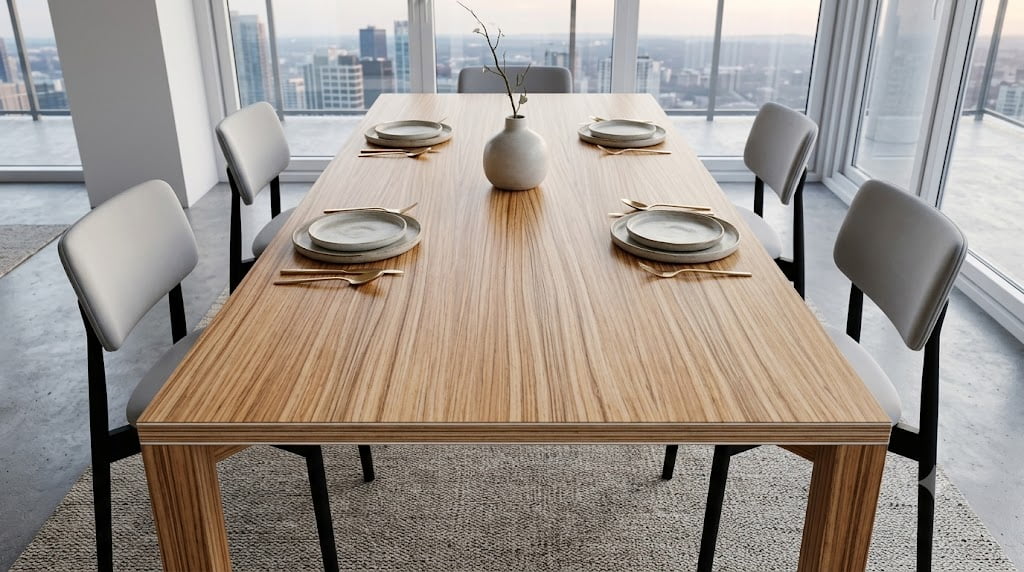
# Why Is Parota Wood Popular In Mexico? Cultural Heritage, Market Dynamics, and Export Opportunities
Walk into any high-end furniture showroom, contemporary restaurant, or upscale residential development in Mexico’s Pacific coast regions, and one wood species dominates the aesthetic landscape: **parota**. From massive live-edge dining tables commanding $5,000-15,000+ to handcrafted decorative bowls sold in artisan markets, this distinctive golden-brown hardwood has achieved a cultural and commercial status unlike any other timber species in Mexican design history.
But parota’s prominence extends far beyond domestic borders. International furniture importers, hospitality designers, and high-end retailers from Los Angeles to London increasingly specify Mexican parota for projects demanding organic luxury and distinctive character. The species has transcended its regional origins to become a globally recognized symbol of contemporary tropical elegance—yet its deepest roots and most sophisticated markets remain firmly planted in Mexican soil.
For international buyers, furniture importers, distributors, and design professionals seeking to understand this remarkable species, a fundamental question emerges: **Why has parota achieved such extraordinary popularity specifically in Mexico?** The answer reveals far more than botanical characteristics or aesthetic appeal—it illuminates the intersection of cultural heritage, ecological abundance, artisan tradition, regional economic development, and sophisticated design evolution that together created a timber species with both profound local significance and powerful global market appeal.
Understanding these dynamics provides strategic advantages for businesses operating in international wood products trade. This comprehensive analysis examines the historical, cultural, environmental, economic, and design factors that established parota as Mexico’s signature hardwood—and explores what this popularity means for import buyers, furniture manufacturers, and distributors evaluating sourcing opportunities and market positioning strategies.
## Geographic Foundation: Where Parota Grows and Why Location Matters
Before examining cultural factors, understanding parota’s geographic distribution is essential—the species’ natural range directly shaped its integration into Mexican material culture and continues to influence commercial availability.
### Natural Range and Ecological Distribution
**Botanical Identity:**
– **Scientific name:** *Enterolobium cyclocarpum*
– **Family:** Fabaceae (legume family)
– **Native range:** Pacific coast of Mexico through Central America to northern South America
– **Mexican distribution:** Concentrated in specific climatic zones
**Primary Mexican Growing Regions:**
**Pacific Coastal States** (Optimal Habitat):
1. **Jalisco**
– **Regions:** Costa Alegre, Costalegre, Sierra de Manantlán
– **Commercial significance:** Largest concentration of furniture manufacturing using parota
– **Cities:** Guadalajara (major furniture hub), Puerto Vallarta (resort development driving demand)
2. **Nayarit**
– **Regions:** Coastal plains, river valleys
– **Resources:** Abundant mature forests, sustainable forestry operations
– **Economic role:** Major timber production region
3. **Colima**
– **Regions:** Lowland tropical forests
– **Characteristics:** Smaller state but significant parota resources
– **Production:** Both commercial forestry and artisan workshops
4. **Michoacán**
– **Regions:** Tierra Caliente, coastal areas
– **Tradition:** Long woodworking history, artisan furniture production
– **Reputation:** Known for high-quality handcrafted parota furniture
5. **Sinaloa**
– **Regions:** Coastal and foothill zones
– **Scale:** Commercial forestry operations
– **Infrastructure:** Well-developed timber industry
6. **Guerrero**
– **Regions:** Costa Grande
– **Character:** Mix of small-scale harvesting and artisan production
– **Market:** Local and tourist-driven demand
**Additional Range:**
– **Chiapas** (southern Pacific coast)
– **Oaxaca** (coastal regions)
– **Smaller populations** in other tropical zones
**Climatic Requirements:**
– **Temperature:** Tropical to subtropical (mean annual 24-28°C)
– **Rainfall:** 1,000-2,500mm annually
– **Altitude:** Sea level to 1,200 meters elevation
– **Soil:** Tolerates various types; prefers well-drained
– **Frost tolerance:** None—strictly tropical/subtropical species
### Why Geographic Concentration Matters
**1. Regional Cultural Integration**
The species’ concentration in specific Mexican states meant:
– **Generations of familiarity:** Communities living with parota trees for centuries developed deep material knowledge
– **Traditional use:** Wood incorporated into vernacular architecture, furniture, tools, utensils long before commercial markets developed
– **Cultural association:** Parota became embedded in regional identity—not an imported exotic but a native heritage material
– **Artisan tradition:** Woodworking skills passed through families, creating expertise clusters
**2. Resource Accessibility**
Unlike imported exotics requiring international logistics:
– **Local availability:** Trees growing within communities where furniture manufactured
– **Reduced transportation:** Lower costs compared to shipping timber internationally
– **Supply chain simplicity:** Direct relationships between forestry operations and manufacturers
– **Economic benefit:** Resource extraction, processing, and manufacturing all occur within Mexican economy
**3. Sustainable Management Potential**
Mexico’s forestry infrastructure enables:
– **Regulatory framework:** Federal and state forestry laws governing parota harvest
– **Community forestry:** *Ejidos* (communal land holdings) manage forests with sustainable practices
– **Plantation development:** Increasingly, parota cultivated in managed operations
– **Certification potential:** FSC and other certifications available for responsibly sourced material
**4. Tree Characteristics Supporting Popularity**
**Massive Size:**
– **Height:** 25-35 meters (80-115 feet)
– **Trunk diameter:** Commonly 1-2 meters; exceptional specimens 3+ meters
– **Canopy spread:** 40-60 meters—among broadest canopies in tropical forests
– **Practical advantage:** Single tree yields massive slabs and wide boards impossible with most species
**Dramatic Presence:**
– **Landscape impact:** Enormous spreading canopy makes individual trees local landmarks
– **Cultural symbolism:** Trees often centuries old become community gathering places, sacred sites
– **Emotional connection:** Specific large parota trees known by name, protected, revered
– **Design implication:** Live-edge furniture maintains visual connection to monumental source trees
**Growth Rate:**
– **Moderate to fast:** 10-15 years to commercial harvest size (faster than many premium hardwoods)
– **Sustainability:** Reasonable regeneration time supports managed forestry
– **Economic viability:** Growers see returns within manageable timeframes
**Nitrogen Fixation:**
– **Ecological role:** Legume family member improves soil nitrogen
– **Agricultural integration:** Historically planted as shade tree in coffee, cacao, cattle operations
– **Contemporary value:** Agroforestry systems incorporate parota for environmental benefits plus eventual timber harvest
## Historical and Cultural Significance
Understanding why parota resonates deeply in Mexican culture requires examining historical use patterns and symbolic meanings:
### Pre-Hispanic and Colonial Period Use
**Indigenous Utilization:**
While documentation of pre-Hispanic parota use is limited compared to more extensively studied species (cedar, mahogany), evidence suggests:
– **Utilitarian applications:** Durable wood used for canoes, agricultural implements, construction where available
– **Sacred associations:** Large, long-lived trees often held spiritual significance in indigenous cosmologies
– **Food source:** Seeds from distinctive ear-shaped pods consumed in some regions (though not primary food crop)
– **Traditional medicine:** Bark, leaves used in folk medicine practices (continuing in some rural areas today)
**Colonial and Post-Colonial Era:**
– **Vernacular architecture:** Where parota abundant, used in roof framing, beams, structural elements
– **Furniture and household items:** Carved bowls, utensils, simple furniture in regions with large trees
– **Agricultural tools:** Yokes, plows, tool handles from durable parota wood
– **Limited export:** Unlike mahogany and Spanish cedar (massively exploited for European markets), parota remained primarily local-use timber
**Significance:** Parota’s history is distinctly **Mexican and Central American**—not a species associated with colonial exploitation or international extraction. This native heritage creates authentic cultural connection unlike imported exotics.
### National Tree Status and Symbolic Importance
**Costa Rica’s National Tree:**
In Costa Rica (where species called *guanacaste*), *Enterolobium cyclocarpum* designated **national tree** in 1959:
– **Symbolism:** Represents Costa Rican natural heritage, environmental conservation
– **Guanacaste Province:** Named after the tree; major cattle-ranching region where parota provides essential shade
– **Cultural resonance:** Tree appears on logos, artwork, official imagery
**Mexican Regional Identity:**
While not Mexico’s official national tree, parota holds profound significance in Pacific coast states:
**Jalisco Connection:**
– **State association:** Parota strongly identified with Jalisco cultural identity
– **Guadalajara furniture industry:** City’s status as major furniture manufacturing center built partially on parota availability
– **Tequila region integration:** Parota shade trees historically planted in agave fields (shade for workers, livestock)
– **Contemporary pride:** Regional designers, manufacturers market “Jalisco parota” as premium provenance
**Resort Development Symbolism:**
– **Puerto Vallarta, Riviera Nayarit:** Luxury resorts extensively use parota to create “authentic Mexican tropical elegance”
– **Cabo San Lucas:** High-end developments showcase parota as signature material
– **Design language:** Parota communicates “Mexican coastal luxury” in architectural and interior design vocabulary
### The “Arbol de la Lluvia” (Rain Tree) Cultural Narrative
**Folklore and Traditional Beliefs:**
**Name Origin:**
Parota called *árbol de la lluvia* (rain tree) in some regions, attributed to:
– **Leaflet movement:** Compound leaves fold at night and during cloudy weather, suggesting tree “predicts” rain
– **Canopy drip:** Massive canopy creates microclimate; moisture condenses and drips beneath even without direct rain
– **Cicada association:** Cicadas (which emerge during rainy season) inhabit trees; their presence associated with rain
– **Mycological:** Some sources suggest symbiotic fungi contribute to moisture beneath canopy
**Cultural Significance:**
– **Community gathering:** Enormous shade provided by mature trees creates natural village squares, meeting places
– **Living monuments:** Individual ancient trees become landmarks, protected, named
– **Generational continuity:** Multi-century lifespan means trees witnessed by many generations—living connection to past
– **Spiritual associations:** Some communities maintain beliefs about tree spirits, protective qualities
**Design Implication:**
When furniture makers reference parota’s cultural background (rain tree legends, community gathering place symbolism, generational continuity), they’re not inventing marketing narratives—they’re drawing on genuine cultural associations that resonate authentically with Mexican buyers and add storytelling depth for international markets.
## Material Properties: Why Parota Works for Mexican Furniture Design
Cultural significance alone doesn’t drive commercial popularity—parota’s physical characteristics perfectly align with Mexican furniture design traditions and contemporary market demands:
### Visual Characteristics Matching Mexican Aesthetic
**Color Palette:**
**Natural Tones:**
– **Base color:** Golden brown with warm honey undertones
– **Range:** Pale straw to deep tobacco brown
– **Variation:** Dramatic color shifts within single pieces
– **Aging:** Deepens to rich patina with UV exposure and time
**Cultural Alignment:**
– **Earth tones:** Harmonizes with traditional Mexican color palette (terra cotta, ochre, umber)
– **Warmth:** Conveys hospitality, comfort—essential Mexican design values
– **Natural variation:** Embraced rather than hidden—Mexican design aesthetic celebrates imperfection, uniqueness
– **Contrast potential:** Works beautifully with vibrant textiles, ceramics, metalwork in traditional Mexican interiors
**Grain Pattern and Figure:**
**Distinctive Characteristics:**
– **Highly interlocked, irregular grain:** Creates three-dimensional visual movement
– **Dramatic swirls and curves:** Organic patterns varying in every piece
– **Cathedral figures:** Arching patterns in flat-sawn cuts
– **Spalting (in some pieces):** Dark zone lines adding artistic character
– **Mineral streaking:** Irregular dark streaks creating natural artwork
**Why This Matters in Mexican Context:**
**1. Authenticity and Organic Character:**
– Mexican design aesthetic increasingly values *imperfección perfecta* (perfect imperfection)
– Wild grain patterns celebrate nature rather than industrial uniformity
– Each piece demonstrably unique—impossible to mass-produce identical items
**2. Live-Edge Tradition:**
– Mexican furniture makers pioneers in live-edge aesthetic (retaining natural bark edge contour)
– Parota’s dramatic growth patterns create spectacular natural edges
– Live-edge tables, benches, wall pieces become sculptural art objects
– Technique showcases tree’s monumental scale—maintaining visual connection to source
**3. Artisan Showcase:**
– Complex grain requires skilled craftsmanship to machine, finish properly
– Furniture demonstrates maker’s expertise—supporting artisan tradition narrative
– Difficulty of working wood increases perceived value (correctly—labor-intensive)
**4. Contemporary Design Compatibility:**
– Organic character aligns with global trend toward biophilic design, natural materials
– Works equally well in rustic, contemporary, or transitional design schemes
– Grain pattern provides visual interest without requiring ornate carving or embellishment
### Physical Properties Supporting Traditional Construction
**Density and Workability:**
– **Density:** 450-550 kg/m³ (medium-light to medium)
– **Janka hardness:** 800-900 lbf (moderate)
– **Practical implication:** Hard enough for durability, soft enough for hand-tool craftsmanship
**Why This Matters:**
**Hand-Tool Tradition:**
– Many Mexican artisan workshops rely partially or entirely on hand tools
– Parota’s moderate density allows skilled craftspeople to work wood with chisels, hand planes, scrapers
– Enables small-scale operations without expensive machinery—supporting economic accessibility
– Maintains artisan tradition link (modern factories use machinery, but hand-crafting remains significant)
**Carving Potential:**
– Medium density ideal for decorative carving
– Holds detail well in relief carving, sculptural elements
– Traditional Mexican furniture often incorporates carved details—parota accommodates this aesthetic
**Machining:**
For modern manufacturing facilities:
– Cuts cleanly with standard carbide tooling
– Routes well for decorative profiles
– Sands to smooth finish
– Compatible with contemporary CNC and production equipment
**Dimensional Stability Challenges and Solutions:**
**The Problem:**
– **Volumetric shrinkage:** 7.5-9.5% (moderate to high)
– **Seasonal movement:** Expansion/contraction with humidity changes
– **Wide boards prone to cupping:** Especially in solid construction
**Traditional Mexican Solutions:**
– **Joinery techniques:** Breadboard ends on tables, frame-and-panel construction—traditional methods accommodate movement
– **Seasoning knowledge:** Generations of experience air-drying parota to appropriate moisture content
– **Design acceptance:** Some movement tolerated in rustic furniture (viewed as natural characteristic, not defect)
**Modern Solutions:**
– **Kiln-drying:** Controlled drying to 8-12% moisture content reduces movement
– **Engineered products:** Parota plywood, MDF with parota veneer—stability with appearance
– **Epoxy integration:** Contemporary technique filling cracks, stabilizing wood while preserving character
**Durability:**
– **Decay resistance:** Moderate (heartwood)
– **Indoor applications:** Excellent longevity
– **Practical use:** Generations-old parota furniture pieces common in Mexican households
## The Modern Mexican Furniture Industry: Manufacturing Infrastructure
Mexico’s developed furniture manufacturing sector creates demand foundation for parota:
### Manufacturing Centers and Clusters
**Jalisco (Guadalajara Metro):**
**Scale:**
– **Primary furniture manufacturing hub** for all of Mexico
– Hundreds of manufacturers from small artisan workshops to large export-oriented factories
– **Estimated 40% of Mexican furniture production** concentrated in Jalisco region
**Parota Specialization:**
– Numerous manufacturers specialize specifically in parota furniture
– Complete supply chain: forestry → sawmills → kiln-drying → manufacturing → finishing
– **Artisan village networks:** Surrounding towns (Tonalá, Tlaquepaque) known for handcrafted furniture, many using parota
– **Export infrastructure:** Established shipping, customs handling for international markets
**Product Range:**
– Dining tables (especially large live-edge)
– Bedroom furniture
– Office furniture
– Decorative accessories
– Custom architectural millwork
**Michoacán:**
**Artisan Tradition:**
– Strong historical woodworking tradition
– Many **family businesses** operating multiple generations
– Emphasis on handcrafted, high-quality pieces
– Regional pride in craftsmanship standards
**Market Position:**
– Premium, artisan-made furniture
– Custom fabrication
– Smaller production volumes than Jalisco factories
– Higher price points reflecting skilled labor
**Nayarit and Sinaloa:**
**Integration:**
– Close to parota forests (minimal transportation)
– Mix of sawmill operations and furniture manufacturing
– Some companies vertically integrated (forestry through finished products)
**Market Focus:**
– Local/regional markets
– Tourism markets (coastal resort towns)
– Some export (smaller scale than Jalisco)
### Scale Diversity: From Artisan Workshops to Export Factories
**Micro-Scale Artisan:**
– **Size:** 1-5 craft
Comments