
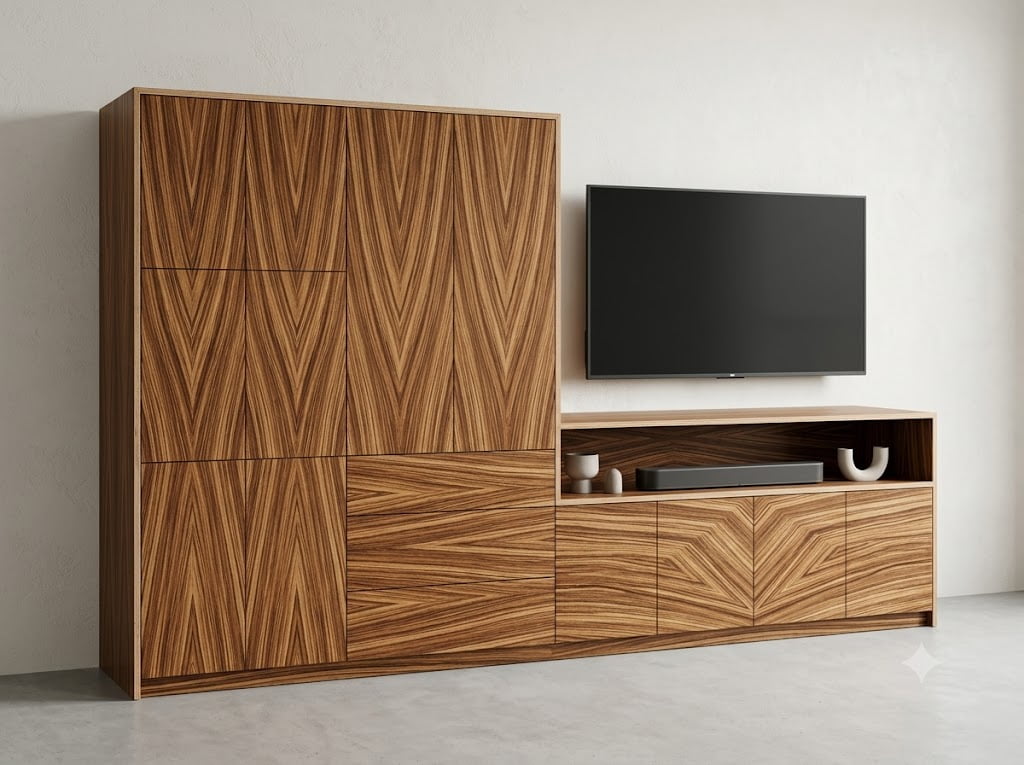
# Characteristics Of Parota Wood For Furniture: Complete Technical Guide for Manufacturers and Buyers
When furniture designers, manufacturers, and importers evaluate hardwood species for premium product lines, a complex calculation unfolds. Material selection must simultaneously address aesthetic impact, structural performance, workability, market positioning, supply chain reliability, and ultimately, profitability. In an increasingly competitive global marketplace where differentiation drives value, the choice between commodity species and distinctive premium hardwoods can define brand identity and determine market success.
For businesses exploring alternatives to traditional hardwoods—seeking species that deliver visual drama without European walnut’s price point, offer tropical warmth without teak’s sustainability concerns, or provide organic character that manufactured materials cannot replicate—**parota wood** (*Enterolobium cyclocarpum*) presents a compelling proposition. This Mexican and Central American hardwood has transitioned from regional material to internationally recognized premium furniture species, appearing in luxury resorts from Cabo to Maldives, high-end residential projects throughout North America, and contemporary furniture showrooms across Europe.
Yet despite growing market presence, comprehensive technical information about parota’s material characteristics remains fragmented. Furniture manufacturers evaluating the species face critical unanswered questions: How does parota’s structural strength compare to oak or walnut for table construction? What finishing challenges should production teams anticipate? Does the wood’s dimensional movement require specialized joinery techniques? Can parota withstand commercial hospitality environments, or is it suitable only for residential applications?
This definitive technical guide addresses these questions systematically, providing the detailed material characteristics, performance data, and practical manufacturing insights that furniture designers, production managers, purchasing directors, and importers require for informed decision-making. From understanding grain structure and density specifications to evaluating moisture behavior and finishing requirements, this comprehensive analysis equips industry professionals with the technical foundation to successfully specify, source, and manufacture furniture using parota wood.
—
## Botanical Classification and Geographic Context
Before examining technical wood characteristics, understanding parota’s botanical identity and natural distribution provides essential context for material availability, sustainability considerations, and supply chain planning.
### Scientific Identity and Common Names
**Botanical Classification:**
– **Scientific name:** *Enterolobium cyclocarpum* (Jacq.) Griseb.
– **Family:** Fabaceae (legume/pea family)
– **Subfamily:** Mimosoideae
– **Related species:** *Albizia*, *Acacia* (similar wood characteristics in some species)
**Regional Common Names:**
**Mexico:**
– **Parota** (most common commercial name—used throughout Pacific coast regions)
– **Paro** (Jalisco, Nayarit)
– **Árbol de la lluvia** (Rain tree—folkloric reference)
– **Caro caro** (some indigenous communities)
– **Guanacaste** (occasionally used, though this name more common in Central America)
**Central America:**
– **Guanacaste** (Costa Rica—national tree; Nicaragua, Honduras)
– **Conacaste** (El Salvador, Guatemala)
– **Caro** (Panama)
**International Trade:**
– **Mexican walnut** (marketing name—misleading as parota is NOT related to walnut family)
– **Monkey ear tree** (reference to distinctive seed pods shaped like human ears)
– **Parota** increasingly recognized as standard commercial name in international markets
**Important Note for Buyers:** When sourcing internationally, verify botanical name (*Enterolobium cyclocarpum*) rather than relying on common names alone—”guanacaste” in some regions refers to different species, and “Mexican walnut” creates confusion with unrelated *Juglans* species.
### Natural Distribution and Commercial Sources
**Native Range:**
– **Geographic extent:** Pacific coast of Mexico through Central America to northern Venezuela and Colombia
– **Latitude:** Approximately 25°N to 10°S
– **Elevation:** Sea level to 1,200 meters (3,900 feet)
**Primary Commercial Sources:**
**1. Mexico** (Largest Commercial Supplier)
**Principal States:**
– **Jalisco:** Most significant furniture manufacturing hub; extensive parota processing infrastructure
– **Nayarit:** Major timber production; sustainable forestry operations; proximity to Guadalajara manufacturing center
– **Sinaloa:** Commercial forestry operations; established export infrastructure
– **Colima:** Smaller volumes; high-quality material
– **Michoacán:** Artisan production; premium handcrafted furniture
– **Guerrero, Oaxaca, Chiapas:** Secondary sources; smaller volumes
**Mexican Supply Chain Advantages:**
– **Established infrastructure:** Sawmills, kiln-drying facilities, furniture manufacturing integrated
– **Export experience:** NAFTA/USMCA facilitates trade with USA/Canada
– **Quality standards:** Modern facilities producing consistent, properly dried material
– **Certification availability:** FSC-certified operations increasingly available
– **Product diversity:** Raw lumber, plywood, veneer, finished furniture
**2. Central America** (Secondary Sources)
**Costa Rica:**
– **Significance:** *Guanacaste* is national tree; strong cultural protection
– **Harvesting:** Increasingly restricted; conservation emphasis
– **Commercial availability:** Limited for export; primarily domestic use
– **Quality reputation:** Historically excellent material when available
**Nicaragua, Honduras, Guatemala:**
– **Availability:** Some commercial forestry operations
– **Export challenges:** Less developed infrastructure than Mexico
– **Market position:** Smaller volumes; opportunistic sourcing
**3. Plantation-Grown Material** (Emerging Source)
**Development:**
– **Mexico:** Increasing plantation forestry operations (especially Jalisco, Nayarit)
– **Central America:** Agroforestry systems incorporating parota for shade and eventual timber harvest
– **Growth rate:** 10-15 years to harvest size (faster than many premium hardwoods)
– **Sustainability:** Addresses concerns about old-growth harvesting; enables certification
**Harvest Characteristics:**
– **Plantation material:** Faster growth typically produces lighter color, less dramatic grain (compared to old-growth)
– **Quality differences:** Old-growth generally more prized for furniture (richer color, more character)
– **Market positioning:** Plantation material still excellent; positioned as sustainable alternative
### Climate Requirements and Ecological Context
Understanding growing conditions helps predict material characteristics and availability:
**Climate:**
– **Temperature:** Tropical to subtropical (mean annual 24-28°C / 75-82°F)
– **Rainfall:** 1,000-2,500mm (40-100 inches) annually
– **Dry season:** Deciduous—tree drops leaves during dry season (affects wood properties)
– **Frost tolerance:** None—strictly tropical/subtropical species
**Growth Characteristics:**
– **Tree size:** 25-35 meters height (80-115 feet); trunk diameter 1-2 meters (exceptional specimens 3+ meters)
– **Canopy spread:** 40-60 meters (130-200 feet)—among broadest canopies in tropical forests
– **Lifespan:** 100-200+ years
– **Root system:** Deep taproot; extensive lateral roots
**Ecological Role:**
– **Nitrogen fixation:** As legume, fixes atmospheric nitrogen (improves soil)
– **Shade provision:** Historically planted in coffee, cacao, cattle operations
– **Wildlife habitat:** Canopy provides habitat; seeds consumed by wildlife
– **Landscape presence:** Individual large trees become landmarks
**Implications for Furniture Industry:**
✅ **Massive Slabs Available:**
– Large trunk diameter enables **single-piece tabletops 1.5+ meters wide**
– Live-edge slabs showcase dramatic scale
– Premium market positioning (large slabs command significant prices)
✅ **Wide Boards:**
– Wide boards reduce need for edge-gluing
– Aesthetic advantage (continuous grain pattern)
– Cost efficiency in some applications
✅ **Sustainability Considerations:**
– **Old-growth harvesting concerns:** Large, centuries-old trees ecologically significant
– **Plantation potential:** Reasonable growth rate supports sustainable management
– **Certification importance:** FSC or equivalent verification increasingly expected by buyers
—
## Physical Characteristics: Appearance and Visual Properties
Parota’s visual characteristics drive much of its commercial appeal—understanding these properties guides material selection, design decisions, and market positioning.
### Color Range and Variation
**Heartwood (Primary Furniture Material):**
**Base Color:**
– **Range:** Light golden brown to medium brown
– **Typical description:** “Honey blonde” to “tobacco brown”
– **Variation:** Significant color variation within single boards and between trees
– **Undertones:** Warm golden, sometimes with slight reddish or olive cast
**Color Factors:**
**1. Tree Age and Growing Conditions:**
– **Younger/faster-grown trees:** Lighter color (pale golden, straw)
– **Older/slower-grown trees:** Deeper, richer brown tones
– **Plantation vs. old-growth:** Old-growth typically darker, more dramatic
**2. Within-Board Variation:**
– **Dramatic color shifts:** Common to see pale sapwood-adjacent areas transitioning to deep brown heartwood within single piece
– **Streaking:** Dark mineral streaks, pigment concentrations create natural patterns
– **Zoning:** Growth ring demarcation sometimes visible as subtle color bands
**3. Position in Tree:**
– **Lower trunk:** Generally darker (older wood)
– **Upper trunk/branches:** Lighter color
– **Core vs. outer heartwood:** Center often darkest
**Color Aging and Light Exposure:**
**Natural Aging:**
– **Darkening trend:** Parota typically **darkens and enriches with age**
– **Patina development:** Develops warm, mellow patina over years
– **Desirable characteristic:** Aging generally considered attractive (not deterioration)
**UV Exposure:**
– **Photochemical reaction:** Direct sunlight accelerates darkening
– **Fading potential:** In extreme UV exposure, some pieces may lighten before ultimately darkening
– **Recommendation:** For pieces in direct sun, periodic rotation or UV-protective finishing advisable
**Finishing Impact on Color:**
**Natural/Oil Finishes:**
– **Color enhancement:** Clear oils **significantly deepen and enrich color**
– **Transformation:** Light honey tones shift to warm amber/caramel
– **”Wet look” permanence:** Oil maintains color-enhanced appearance
– **Popular choice:** Most manufacturers prefer oil finishes to showcase wood’s warmth
**Film Finishes (Lacquer, Polyurethane):**
– **Moderate enhancement:** Less dramatic color shift than oils
– **Amber tint:** Some finishes add slight amber cast
– **Protection:** Better UV protection than oils (reduces photochemical color change)
**Staining:**
– **Accepts stain:** Can be stained, though rarely done (natural color preferred)
– **Uneven absorption:** Color variation in wood causes uneven stain absorption
– **Recommendation:** If color adjustment needed, toner/dye systems more predictable than penetrating stains
**Sapwood:**
– **Color:** Pale yellow to nearly white
– **Width:** Narrow sapwood band (typically 3-6cm / 1-2 inches)
– **Commercial practice:** Usually removed (inferior properties, color contrast too extreme)
– **Occasional use:** Some designers intentionally include sapwood for dramatic color contrast in contemporary pieces
**Design and Market Implications:**
✅ **Warmth and Welcoming Aesthetic:**
– Golden/brown tones psychologically associated with warmth, comfort, hospitality
– Ideal for residential furniture, hospitality environments (restaurants, hotels)
✅ **Versatile Color Coordination:**
– Neutral warm tones complement wide range of color schemes
– Works with traditional earth-tone palettes and contemporary neutrals
✅ **Premium Market Positioning:**
– Rich coloration (especially darker old-growth) communicates luxury, quality
– Color depth rivals American walnut (at lower price point)
⚠️ **Color Matching Challenges:**
– Significant variation means **matching pieces from different boards difficult**
– **Recommendation:** For sets (dining chairs, bedroom suites), cut all components from same tree/flitch when possible
– Some variation expected and accepted in rustic/artisan-style furniture
### Grain Pattern and Figure
Parota’s grain characteristics create its distinctive visual identity and significantly influence market appeal:
**Grain Structure:**
**Primary Characteristics:**
– **Interlocked grain:** Fibers spiral around trunk, alternating direction
– **Irregular patterns:** Grain direction shifts unpredictably
– **Wavy grain:** Undulating patterns common
– **Wild character:** Highly irregular—no two pieces identical
**Visual Effects:**
**1. Three-Dimensional Movement:**
– Interlocked grain creates **depth and motion** in flat surfaces
– Light reflection changes with viewing angle (chatoyance effect)
– Surface appears dynamic rather than static
**2. Swirls and Curves:**
– **Dramatic swirling patterns** where grain changes direction
– **Knot integration:** Wood grain flows around knots, creating organic artwork
– **Branch junctions:** Spectacular figure at crotch wood, branch attachments
**3. Cathedral Patterns:**
– **Flat-sawn boards:** Produce classic “cathedral” or “crown” figures
– **Growth ring visibility:** Distinct growth rings create arching patterns
– **Traditional appeal:** Cathedral figure valued in classic furniture designs
**4. Ribbon Stripe (Occasional):**
– **Quarter-sawn boards:** Interlocked grain produces **ribbon stripe figure**
– **Alternating light/dark bands:** As light reflects off alternating grain angles
– **Rarity in parota:** Less common than in mahogany or sapele (parota typically flat-sawn to maximize width)
**Special Figure Types:**
**Spalting:**
– **Occurrence:** In some pieces, fungal activity creates dark zone lines
– **Appearance:** Black or dark brown irregular lines, patterns
– **Stability:** Spalted wood structurally sound if caught early (before significant decay)
– **Market appeal:** Highly prized by designers for unique artistic character
– **Rarity:** Not all parota spalted; premium when present
**Mineral Streaking:**
– **Description:** Dark pigment deposits create streaks, patches
– **Appearance:** Black, dark brown, or olive-green streaks
– **Cause:** Mineral uptake during growth
– **Variability:** Some boards heavily streaked, others minimal
– **Design value:** Adds character, uniqueness
**Burl Figure (Rare):**
– **Description:** Highly distorted grain from burl growth
– **Appearance:** Swirling eyes, intense figure concentration
– **Applications:** Veneers, decorative boxes, high-value specialty items
– **Availability:** Limited—burls uncommon in parota
**Crotch Figure:**
– **Description:** V-shaped dramatic figure from branch junctions
– **Appearance:** Feather or flame patterns radiating from crotch
– **Applications:** Decorative panels, tabletops, premium furniture faces
– **Harvesting:** Requires careful cutting to capture figure
**Texture:**
**Surface Characteristics:**
– **Natural texture:** Medium to moderately coarse
– **Pore size:** Medium-large open pores (ring-porous structure)
– **Tactile quality:** Some texture perceptible to touch even when sanded smooth
**Finishing Implications:**
– **Pore filling:** Open pores require **grain filler for glass-smooth finish**
– **Alternative:** Many manufacturers embrace natural texture (oil finishes maintain open-pore character)
– **Sanding:** Requires thorough sanding progression (80→120→150→180 grit minimum) for smooth result
**Aesthetic Character Summary:**
**What Parota Delivers:**
✅ **Organic, natural character:** Wild grain patterns impossible to replicate
✅ **Visual drama:** High-impact appearance without carving or embellishment
✅ **Uniqueness:** Every piece demonstrably one-of-a-kind
✅ **Tropical warmth:** Golden tones communicate luxury, comfort
✅ **Design versatility:** Works in rustic, contemporary, transitional styles
**Design Considerations:**
⚠️ **Not for minimalist uniformity:** Species unsuitable for applications requiring identical, uniform appearance
⚠️ **Grain matching challenges:** Creating perfectly matched sets difficult
⚠️ **Character acceptance:** Buyers must appreciate natural variation (knots, color shifts, grain irregularity)
—
## Physical and Mechanical Properties: Structural Performance
Understanding parota’s strength characteristics is essential for engineering furniture components appropriately and setting realistic performance expectations.
### Density and Weight
**Average Density:**
– **Air-dry density (12% MC):** 450-550 kg/m³ (28-34 lbs/ft³)
– **Classification:** Medium-light to medium density
– **Typical commercial material:** ~500 kg/m³ (31 lbs/ft³)
**Comparative Context:**
| Species | Density (kg/m³) | Classification |
|———|—————-|—————-|
| Balsa | 160 | Very Light |
| Pine (Eastern White) | 400 | Light |
| **Parota** | **500** | **Medium-Light** |
| Cherry (Black) | 560 | Medium |
| Walnut (Black) | 610 | Medium |
| Oak (Red) | 660 | Medium-Heavy |
| Maple (Hard) | 705 | Heavy |
| Teak | 630
Comments