
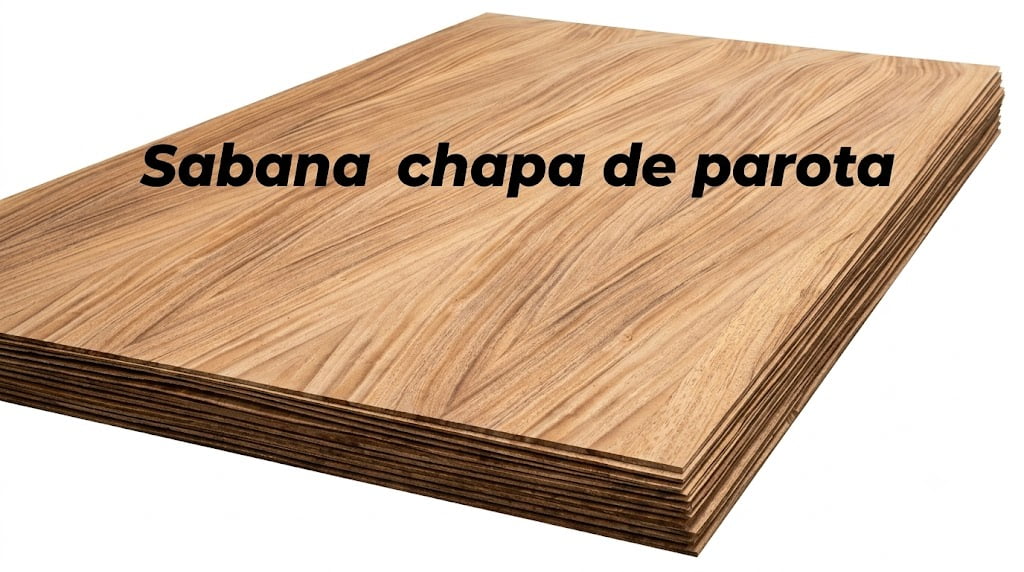
# Parota Plywood Price Guide 2025-2026: Complete Pricing Analysis for Buyers, Importers, and Manufacturers
Understanding **parota plywood pricing dynamics** represents one of the most critical factors for **furniture manufacturers, cabinet makers, architectural millwork companies, interior designers, construction firms, importers, distributors, and procurement professionals** making sourcing decisions that directly impact **product costs, profit margins, competitive positioning, inventory investment, supplier selection, and overall business economics**. Yet parota plywood pricing remains one of the most **confusing, opaque, and misunderstood aspects** of wood panel procurement—with dramatic price variations between suppliers, hidden costs that transform “cheap” quotes into expensive mistakes, regional pricing differences that create arbitrage opportunities, quality-price relationships that aren’t always linear, volume discounts that significantly alter economics, specification changes that impact pricing by 30-50% or more, and market forces creating price volatility that requires strategic planning.
For **business owners** budgeting major furniture production expansions, **procurement managers** negotiating annual supply contracts, **importers** evaluating market entry economics, **distributors** setting inventory investment levels and retail pricing strategies, **manufacturers** conducting make-vs-buy analyses comparing solid parota lumber to veneered plywood, **project managers** estimating material costs for large architectural installations, and **financial planners** forecasting cost structures for 2025-2026 production planning—having access to **accurate, detailed, comprehensive pricing intelligence** isn’t just helpful—it’s essential for making informed decisions that determine profitability, competitiveness, and business success.
Many buyers make expensive pricing mistakes: focusing solely on initial quoted FOB prices while ignoring total landed costs that increase expenses by 30-50%, failing to understand specification impacts that dramatically affect pricing, accepting generic quotes without clarifying exact product details, comparing quotes for different quality grades as if equivalent, overlooking volume discount opportunities, poor timing of purchases relative to market cycles, inadequate supplier negotiation leaving money on the table, and lack of understanding regarding what constitutes “fair market pricing” versus inflated or unsustainably low pricing.
This comprehensive price guide addresses every critical pricing question facing parota plywood buyers in 2025-2026: **What are realistic price ranges by grade, specification, and source? How do Chinese, Southeast Asian, North American, and Mexican domestic prices compare? What factors drive pricing differences? How do specifications impact costs? What are total landed costs vs FOB pricing? What volume discounts should you expect? How is pricing trending for 2025-2026? What negotiation strategies work? What are the hidden costs? How do you evaluate true value vs just lowest price?**
—
## Section 1: Understanding Parota Plywood Pricing Structure
### The Complexity of Parota Plywood Pricing
**Why Parota Plywood Pricing Is Particularly Complex:**
**Factor #1: Limited Supply and Species Confusion**
Unlike commodity plywood species (birch, oak, maple) with established markets and transparent pricing, parota faces unique challenges:
❌ **Limited commercial production:** Parota veneered plywood is not a mainstream product category
❌ **Species substitution common:** Many suppliers use look-alike species without clear disclosure
❌ **No standardized market pricing:** Unlike commodity plywood with published price indices
❌ **Regional availability varies:** Genuine parota veneer supply concentrated in Mexico/Central America
❌ **Quality variation extreme:** “Parota plywood” can mean dramatically different products
**Result:** Quoted prices for “parota plywood” may be comparing fundamentally different products.
**Factor #2: Specification Impact on Pricing**
Small specification changes create major pricing differences:
**Face Veneer Thickness:**
– **0.3-0.4mm (thin):** Base pricing
– **0.5-0.6mm (standard):** +15-25% vs thin
– **0.8-1.0mm (thick):** +40-60% vs standard
– **1.2-1.5mm (premium):** +80-120% vs standard
**Core Material Type:**
– **Combi core (mixed hardwoods):** Base pricing
– **Eucalyptus core:** +10-15% vs combi
– **Poplar core (lightweight):** +15-20% vs combi
– **Birch core (premium):** +25-40% vs combi
– **Full hardwood veneer core:** +30-50% vs standard plywood core
**Grade Quality:**
– **C/D grade (economy):** Base pricing
– **B grade (standard commercial):** +20-30% vs C/D
– **A grade (select):** +35-50% vs C/D
– **AA grade (premium book-matched):** +60-100% vs C/D
**Panel Size:**
– **1220x2440mm (4’x8′ standard):** Base pricing
– **1525x3050mm (5’x10′ large format):** +8-12% per m² (less efficient cutting)
– **Custom sizes:** +15-30% typically (depends on MOQ)
**Formaldehyde Standards:**
– **E2 standard (basic):** Base pricing
– **E1 standard:** +5-8%
– **E0 / CARB P2:** +10-15%
– **NAF (No Added Formaldehyde):** +20-30%
**Example Price Impact:**
**Base specification:** 12mm, B grade, 0.4mm face veneer, combi core, E2, 1220x2440mm
– **Base price:** $12/m² FOB China
**Premium specification:** 12mm, AA grade, 0.8mm face veneer, birch core, CARB P2, 1220x2440mm
– **Premium price:** $26/m² FOB China
– **Price increase:** +117%
**Same thickness—completely different products and pricing!**
**Factor #3: Genuine Parota vs Look-Alike Species**
**Critical Price Driver:**
**Genuine Parota Veneer (Enterolobium cyclocarpum):**
– **Source:** Mexico, Central America (limited supply)
– **Veneer cost:** Premium due to limited availability
– **Characteristics:** Distinctive golden-brown; dramatic figuring; specific grain pattern
– **Price premium:** +20-40% vs look-alike species
**Common Look-Alike Species (Often Marketed as “Parota-Style”):**
**Acacia Wood:**
– **Source:** Vietnam, Thailand, China (abundant plantation supply)
– **Appearance:** Similar golden-brown color; comparable grain
– **Cost:** 20-35% less than genuine parota
– **Most common substitute:** Industry standard
**Rubber Wood (Hevea brasiliensis):**
– **Source:** Southeast Asia (very abundant—from rubber plantations)
– **Appearance:** Lighter color; similar grain pattern; can be stained
– **Cost:** 30-40% less than genuine parota
– **Usage:** Often used for painted/stained applications
**Mindi Wood (Melia azedarach):**
– **Source:** Southeast Asia
– **Appearance:** Close color match to parota
– **Cost:** 25-35% less than genuine parota
**Mixed Tropical Hardwoods:**
– **Generic “golden wood” blends**
– **Lowest cost option:** 40-50% less than genuine parota
– **Variable quality and appearance**
**Price Comparison Example (12mm, A grade, standard specs):**
– **Genuine parota face veneer:** $18-22/m² FOB China
– **Acacia face veneer:** $13-16/m² FOB China (savings: 28-38%)
– **Rubber wood face veneer:** $11-14/m² FOB China (savings: 36-50%)
– **Mixed tropical hardwood:** $9-12/m² FOB China (savings: 45-56%)
**Critical Note:** Many suppliers don’t clearly specify actual face veneer species. Always **verify exact species** in specifications and contracts—price differences reflect real material differences.
**Factor #4: Volume and Relationship Pricing**
**Purchase Volume Impact:**
**Sample/Trial Orders (1-5 sheets):**
– **Pricing:** Retail/maximum pricing (+100-200% vs container pricing)
– **Purpose:** Product evaluation only
– **Sample cost:** $50-150 per sheet typical (including courier shipping)
**LCL (Less than Container Load, <15 CBM):** - **Pricing:** +40-60% vs full container due to consolidation costs - **Logistics complexity:** Higher shipping cost per m³ - **Break-even:** Rarely cost-effective vs full container for regular purchasing **Single Container (20GP or 40HQ):** - **Pricing:** Standard quoted pricing - **MOQ (Minimum Order Quantity):** Most supplier minimum - **Volume:** ~30 CBM (20GP) or ~68 CBM (40HQ) **Multi-Container Orders (2-5 containers):** - **Discount:** 3-8% below single container pricing - **Negotiation leverage:** Moderate - **Timing:** Usually per shipment, not requiring simultaneous production **Large Volume (10+ containers annually):** - **Discount:** 8-15% below single container pricing - **Relationship pricing:** Suppliers invest in relationship - **Terms improvement:** Better payment terms; priority production; technical support - **Contract pricing:** Annual contracts with volume commitments **Strategic Volume (50+ containers annually):** - **Discount:** 15-25% below standard pricing - **Partnership level:** True strategic supplier relationship - **Customization:** Willing to customize products; develop exclusive specifications - **Terms:** Best payment terms; dedicated service; quality consistency prioritized **Volume Discount Example:** **Base specification:** 12mm, A grade, eucalyptus core, standard parota veneer - **Single container (2,000 m²):** $16/m² = $32,000 - **5 containers annually (10,000 m²):** $14.80/m² = $148,000 (saves $12,000 annually) - **20 containers annually (40,000 m²):** $13.60/m² = $544,000 (saves $96,000 annually) - **Strategic 50 containers annually (100,000 m²):** $12.40/m² = $1,240,000 (saves $360,000 annually) **Relationship Pricing Evolution:** **New Buyer (First Order):** - Standard pricing - Strict payment terms (30% deposit, 70% before shipment typical) - Standard lead times - Basic communication **Established Buyer (5-10 containers over 12 months):** - 5-8% discount recognition - Improved payment terms (possibly 15-day payment after inspection) - Priority during busy seasons - Better communication; proactive updates **Strategic Partner (20+ containers annually; 2+ years relationship):** - 12-18% discount vs initial pricing - Best payment terms (potentially 30-60 day terms for creditworthy customers) - First priority during capacity constraints - Dedicated account management - Joint product development - Quality consistency prioritization - Problem resolution priority **Key Negotiation Point:** Volume discounts are ALWAYS negotiable—but require demonstrated commitment (not just promises). Start with single container; prove yourself as reliable buyer; then negotiate based on actual volume history. --- ## Section 2: Price Ranges by Source and Specification (2025-2026) ### Chinese Manufacturers (FOB Pricing) **Primary Source for Most Mexican Importers** China dominates global plywood production and typically offers the **most competitive pricing** for parota plywood—but with significant quality variation requiring careful supplier selection and quality control. **Economy Grade (C/D Grade, Thin Veneer, Combi Core)** **Specifications:** - **Grade:** C/D face and back; visible color variation; small knots acceptable - **Face veneer thickness:** 0.3-0.4mm - **Core:** Mixed hardwood combi core - **Glue:** E2 standard - **Typical use:** Paint-grade applications; budget furniture; construction **Pricing (FOB China, per square meter):** | Thickness | Single Container | 5+ Containers | 20+ Containers | |-----------|------------------|---------------|----------------| | 9mm | $8-10 | $7.50-9.20 | $6.80-8.50 | | 12mm | $9.50-12 | $8.80-11 | $8-10 | | 15mm | $11-13.50 | $10.20-12.50 | $9.20-11.20 | | 18mm | $13-16 | $12-14.80 | $10.80-13.30 | **40HQ Container Value Examples:** - **12mm, 5,800 m²:** $55,100-69,600 (single container pricing) - **Annual 20 containers:** $464,000-580,000 (volume discount applied) **Standard Commercial Grade (B Grade, Standard Veneer, Eucalyptus Core)** **Specifications:** - **Grade:** B face veneer; generally uniform appearance; minor variation acceptable - **Face veneer thickness:** 0.5-0.6mm - **Core:** Eucalyptus plywood core (good stability) - **Glue:** E1 standard - **Typical use:** Stain-grade furniture; cabinets; millwork; general commercial applications **Pricing (FOB China, per square meter):** | Thickness | Single Container | 5+ Containers | 20+ Containers | |-----------|------------------|---------------|----------------| | 9mm | $12-14.50 | $11-13.30 | $10-12.20 | | 12mm | $14-17 | $12.80-15.60 | $11.70-14.20 | | 15mm | $16-19.50 | $14.70-17.90 | $13.40-16.30 | | 18mm | $18.50-22.50 | $17-20.70 | $15.50-18.80 | | 21mm | $21-25.50 | $19.30-23.40 | $17.50-21.30 | | 25mm | $24-29 | $22-26.60 | $20-24.20 | **40HQ Container Value Examples:** - **15mm, 4,500 m²:** $72,000-87,750 (single container pricing) - **18mm, 3,800 m²:** $70,300-85,500 (single container pricing) - **Annual 10 containers (mixed specs):** ~$750,000-900,000 total **Most Popular Choice:** This grade represents the "sweet spot" for most furniture manufacturers—good quality-to-price ratio; suitable for stain/clear finish; reliable supply; acceptable for most commercial applications. **Premium Select Grade (A Grade, Thick Veneer, Quality Core)** **Specifications:** - **Grade:** A face veneer; tight color matching; select quality - **Face veneer thickness:** 0.8-1.0mm - **Core:** Premium eucalyptus or birch core - **Glue:** E0 or CARB P2 compliant - **Typical use:** High-end furniture; architectural millwork; premium cabinetry **Pricing (FOB China, per square meter):** | Thickness | Single Container | 5+ Containers | 20+ Containers | |-----------|------------------|---------------|----------------| | 12mm | $19-23 | $17.50-21.20 | $16-19.30 | | 15mm | $22-27 | $20.20-24.80 | $18.40-22.60 | | 18mm | $25-31 | $23-28.50 | $20.90-25.90 | | 21mm | $29-35 | $26.60-32.20 | $24.20-29.30 | **40HQ Container Value Examples:** - **15mm, 4,500 m²:** $99,000-121,500 (single container pricing) - **18mm, 3,800 m²:** $95,000-117,800 (single container pricing) **Premium Book-Matched Grade (AA Grade, Premium Veneer, Birch Core)** **Specifications:** - **Grade:** AA book-matched or slip-matched face; premium appearance; tight color control - **Face veneer thickness:** 1.0-1.5mm - **Core:** Premium birch or full hardwood veneer core - **Glue:** CARB P2 or NAF (no added formaldehyde) - **Typical use:** Luxury furniture; architectural feature walls; premium residential millwork; high-end commercial
Comments