
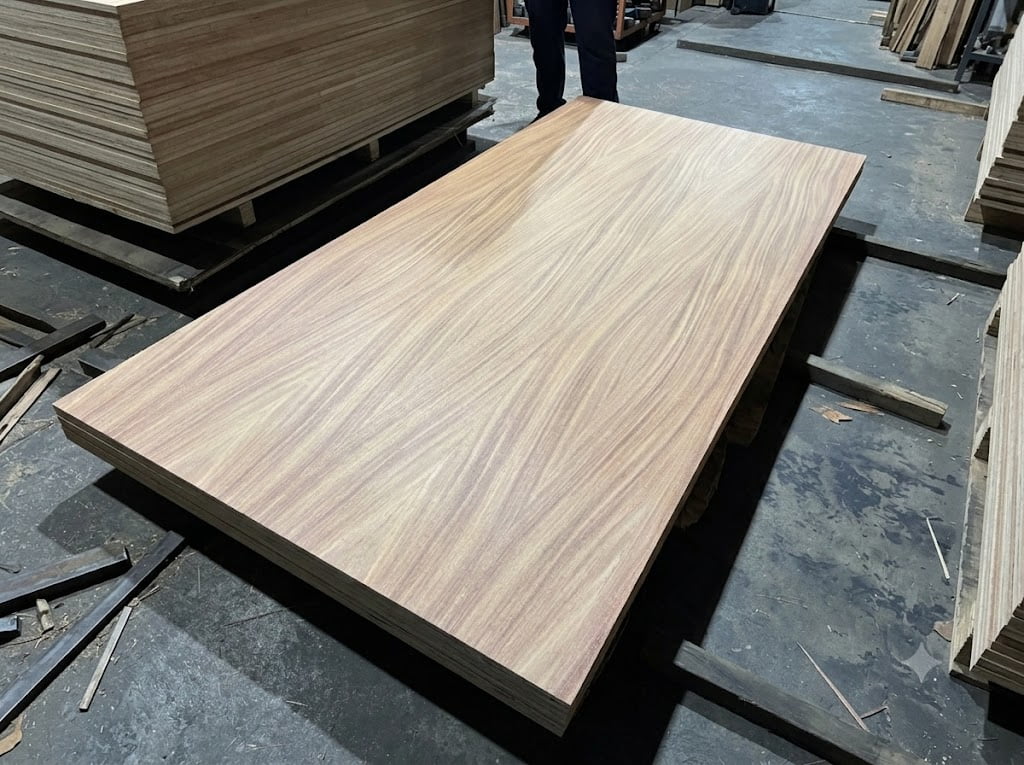
Ultimate Guide to Parota Engineered Wood Panels: Plywood, MDF and Block Board
Parota engineered wood panels have emerged as a sought-after material solution for furniture manufacturers, interior designers, and architectural millwork contractors seeking to incorporate the exotic beauty of parota wood into commercial-scale production while managing costs and maintaining dimensional stability. As a leading manufacturer and supplier of parota engineered veneer panels, we serve furniture factories, cabinet makers, hospitality contractors, and building material distributors worldwide who require the distinctive golden-brown coloration and dramatic grain patterns of parota (Enterolobium cyclocarpum) combined with the practical advantages of engineered panel construction. Whether you’re producing live-edge dining tables, contemporary cabinetry, architectural wall panels, or custom hospitality furniture, understanding the construction differences, performance characteristics, and optimal applications for parota plywood, MDF, and block board panels is essential for material selection that balances aesthetic requirements, technical performance, and project economics.
This comprehensive guide provides furniture manufacturers and wood product buyers with detailed technical information on parota engineered panel types, construction methods, specification options, and application-specific selection criteria necessary for confident procurement decisions. From understanding how parota face veneers transform standard plywood, MDF, and block board substrates into premium architectural surfaces, to comparing strength properties, workability characteristics, and cost structures across panel types, this resource addresses the critical factors influencing successful parota panel specification for commercial furniture and interior applications.
- What are Parota Engineered Wood Panels?
- Parota Plywood: Construction, Specifications and Applications
- Parota MDF: Characteristics and Best Uses
- Parota Block Board: Structure and Applications
- Parota Plywood vs MDF vs Block Board: Complete Comparison
- Advantages of Parota Engineered Panels for Furniture
- Common Applications of Parota Wood Panels by Type
- How to Choose the Right Parota Panel Type
- Parota Panel Quality Factors and Grading Standards
- Parota Engineered Panels Pricing Guide
- Buying Guide for Parota Panels: Bulk Orders and Custom Manufacturing
- Frequently Asked Questions
What are Parota Engineered Wood Panels?
Parota engineered wood panels represent a category of composite wood products that combine engineered core substrates—such as plywood, medium-density fiberboard (MDF), or block board—with natural parota wood veneer face layers to create panel products delivering parota’s distinctive appearance characteristics at significantly lower cost and improved dimensional stability compared to solid parota lumber. This engineered construction approach addresses the practical challenges inherent in working with solid parota wood, including limited availability in wide boards, high material costs, potential warping and movement in solid panels, and waste generated when milling solid stock for furniture and architectural components. By applying thin parota veneer (typically 0.3mm-1.5mm thickness) to stable engineered cores, manufacturers produce large-format panels exhibiting parota’s exotic beauty throughout the visible surface while leveraging engineered substrates’ superior stability, cost-effectiveness, and manufacturing efficiency.

The term “parota” refers to Enterolobium cyclocarpum, a large tropical hardwood species native to Central and South America (particularly Mexico, Guatemala, and northern South America) where it grows rapidly to substantial dimensions—mature specimens may reach 30-40 meters in height with trunk diameters exceeding 2 meters. Parota wood is prized for its distinctive appearance: heartwood ranging from golden-brown to rich medium brown with darker grain lines creating dramatic visual contrast, often featuring natural character including mineral streaking, spalting, and irregular grain patterns that enhance rather than detract from the wood’s exotic appeal. The species is particularly valued for live-edge furniture applications where the natural wood edge and irregular grain create organic, contemporary aesthetic highly desired in modern furniture and interior design.
Engineered parota panels extend this exotic species’ accessibility to commercial furniture manufacturing and architectural applications where solid parota’s cost and availability would otherwise prove prohibitive. By combining parota veneer with engineered cores manufactured to precise specifications, panel manufacturers deliver products suitable for CNC machining, edge banding, lamination, and other industrial processes while maintaining parota’s signature appearance throughout finished furniture and architectural surfaces.
Understanding Parota Wood Characteristics
Understanding parota wood’s natural characteristics is essential for evaluating engineered panel quality and predicting performance in different applications, as the face veneer’s properties significantly influence the finished panel’s appearance and working characteristics:
Color and Appearance: Parota heartwood exhibits warm golden-brown to medium chocolate-brown coloration with considerable variation based on growing conditions and tree age. Unlike species with uniform color distribution, parota typically displays dramatic color variation and grain contrast that creates visual interest—lighter sapwood transitions gradually to darker heartwood, darker grain lines create striking patterns against lighter background, and natural irregularities including mineral streaking, spalting (fungal discoloration), and interlocked grain add character rather than defects. This natural variability means parota panels will show piece-to-piece color and pattern variation—a characteristic embraced in contemporary furniture design where natural material variation enhances rather than detracts from aesthetic appeal.
Grain Pattern: Parota grain ranges from straight to interlocked with frequent irregular patterns creating distinctive figure. The species rarely exhibits the uniform, predictable grain of commercial species like oak or maple—instead, parota’s grain may swirl, change direction, include burl-like figure, or display other irregular patterns resulting from the tree’s rapid growth and massive dimensions. This grain character translates beautifully to engineered panels where rotary-cut or sliced veneer captures parota’s dramatic patterns across large panel surfaces. Quarter-sawn parota may show ribbon-stripe figure similar to premium African species, while flat-sawn produces broader, more varied patterns favored for contemporary furniture.
Texture and Workability: Parota wood features medium to coarse texture with open pores similar to oak, though typically less pronounced. The wood machines well despite occasional interlocked grain that may cause tearout if cutting direction opposes grain orientation. Parota takes finishes excellently—natural oil finishes enhance the golden color and grain contrast, while clear topcoats provide durable protection for furniture and architectural surfaces. The species’ coarse texture means thin veneers (under 0.5mm) may telegraph substrate imperfections, making thicker veneer faces (0.6mm-1.5mm) preferable for premium applications requiring smooth surface appearance.
Durability and Stability: As a tropical hardwood, parota exhibits moderate natural durability with some resistance to decay and insect attack, though not comparable to highly durable species like teak or ipe. However, in engineered panel applications where parota veneer serves as decorative facing over stable cores, natural durability becomes less critical than the core substrate’s moisture resistance and dimensional stability. Parota’s moderate density (approximately 400-550 kg/m³ depending on moisture content) positions it lighter than oak or maple, contributing to lighter panel weight when used as face veneer—an advantage for furniture and wall panels where weight reduction improves handling and installation efficiency.
What Makes Engineered Panels Different from Solid Wood
Engineered panel construction fundamentally differs from solid wood manufacturing in ways that deliver specific performance advantages critical to commercial furniture production and architectural installation:
Dimensional Stability: Solid
Comments