
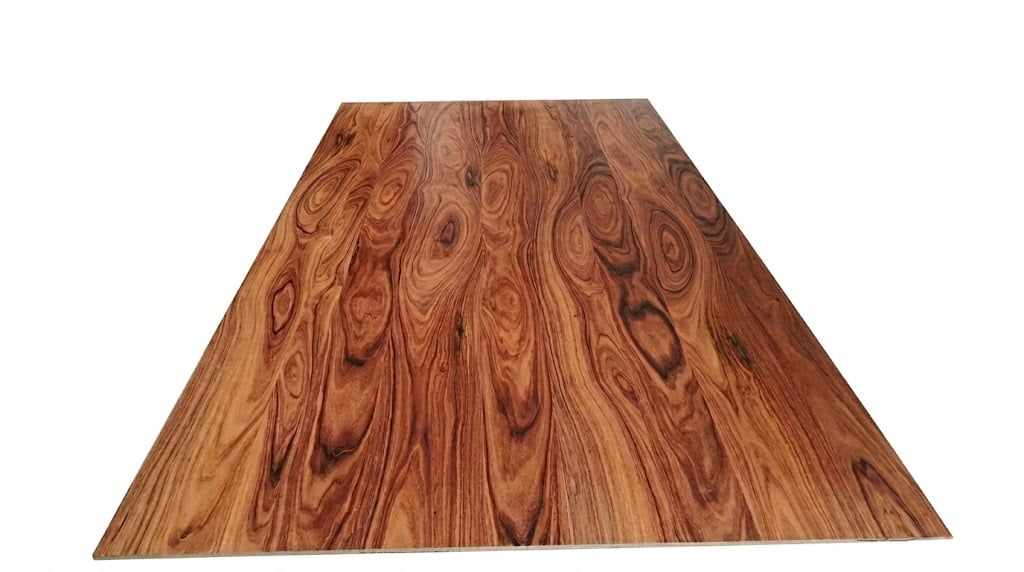
Random Match vs Book Match Veneer: What’s the Difference?
Walk into any high-end furniture showroom or luxury home, and you’ll notice that some wood surfaces display perfectly symmetrical, mirror-image grain patterns while others showcase a more natural, varied appearance. This fundamental aesthetic difference comes down to one critical manufacturing decision: veneer matching pattern.
The choice between random match vs book match veneer dramatically impacts the visual character, perceived quality, and cost of veneered plywood products—yet many buyers, and even some manufacturers, don’t fully understand the differences or when to specify each technique.
As a premium veneer plywood manufacturer serving furniture makers, cabinet designers, and architectural millwork companies worldwide, we specify matching patterns on every order. The wrong choice can undermine a design vision or unnecessarily inflate costs, while the right selection elevates aesthetics and optimizes value.
This comprehensive guide explains the practical differences, visual impacts, cost considerations, and application-specific recommendations to help you choose the optimal veneer matching pattern for every project.
- Understanding Veneer Matching Patterns
- Visual Appearance Comparison
- Manufacturing Process Differences
- Book Match Veneer: Advantages and Disadvantages
- Random Match Veneer: Advantages and Disadvantages
- Application-Specific Recommendations
- Cost Comparison and Value Considerations
- How to Choose the Right Matching Pattern
- Frequently Asked Questions
Understanding Veneer Matching Patterns
Before comparing advantages, it’s essential to understand what veneer matching actually means and how manufacturers create different patterns.
What is Book Match Veneer?
Book match veneer (also called “book matching” or “bookmatched veneer”) is a technique where consecutive veneer sheets from the same log are opened like pages of a book and placed side-by-side to create a mirror-image pattern.
Key characteristics include:
- Mirror symmetry: Grain pattern on one sheet perfectly mirrors the adjacent sheet, creating a balanced, symmetrical appearance
- Sequential sheets: Veneer leaves come from consecutive cuts in the flitch (bundle of veneer from one log)
- Alternating faces: Adjacent sheets show opposite faces—one tight face (smooth), one loose face (slightly rougher)—though this becomes negligible after finishing
- Center seam: Most prominent seam runs down the center where the two mirror-image sheets meet
- Formal appearance: Creates intentional, organized aesthetic emphasizing craftsmanship and premium quality
- Figure emphasis: Dramatically showcases figured grain patterns like cathedral, quilted, or fiddleback grain
Think of book matching like opening a book and seeing text on both pages mirror each other—except instead of text, you’re seeing wood grain patterns creating perfect symmetry.
In book matched veneer panels, this symmetrical pattern typically runs vertically down the panel face, creating a distinctive center seam with mirrored grain flowing outward on both sides.
What is Random Match Veneer?
Random match veneer (also called “running match” or “unmatched veneer”) is a technique where veneer sheets are laid side-by-side in the sequence they come from manufacturing, without intentionally creating patterns or symmetry.
Key characteristics include:
- Natural variation: Each veneer sheet shows its own grain character without attempting to match adjacent sheets
- Sequential placement: Sheets are placed in the order they’re cut, but without opening/flipping to create patterns
- Color variation: May show more color variation between adjacent sheets since they come from different positions in the log
- Multiple seams: Seams occur wherever sheets join, without emphasis on any particular seam
- Casual appearance: Creates natural, organic aesthetic resembling solid wood boards
- Unpredictable patterns: Each panel is unique; grain patterns can’t be exactly replicated
Random match mimics the appearance of solid wood planking or flooring where individual boards naturally vary in color and grain character. The result feels less formal and more authentically “natural.”
Other Matching Patterns (Slip Match, Quarter Match)
While book match and random match are most common, other techniques exist for specific applications:
Slip Match:
- Sequential veneer sheets placed side-by-side without flipping
- Creates repeating grain pattern rather than mirror symmetry
- All sheets show the same face (tight or loose)
- Common in vertical-grain applications where symmetry isn’t desired
- Less dramatic than book match but more organized than random match
Quarter Match:
- Four consecutive sheets arranged to create symmetry in both horizontal and vertical directions
- Creates “four-way match” with center meeting point
- Most formal and intentional matching pattern
- Reserved for highest-end applications and highly figured veneers
- Significantly more expensive due to precise matching requirements
Balance Match:
- Veneer sheets arranged so panel has equal veneer widths on each edge
- Creates visual balance without necessarily creating mirror-image symmetry
- Practical for panels where visual weight distribution matters
For most furniture, cabinetry, and architectural applications, the choice comes down to book match vs random match veneer, with slip match as an occasional alternative.

Visual Appearance Comparison
Book Match Visual Characteristics
The book match veneer pattern creates distinctive visual characteristics that immediately signal premium craftsmanship:
Symmetry and Balance:
- Perfect mirroring: Grain patterns flow symmetrically from a central seam, creating balanced composition
- Cathedral effects: V-shaped cathedral grain patterns become dramatic mirrored arches
- Figure doubling: Figured patterns like quilting, fiddleback, or burl appear doubled and emphasized
- Visual anchoring: Center seam creates a strong vertical axis that organizes the entire surface
- Formal presence: Intentional symmetry conveys deliberate design and quality attention
Grain Flow and Movement:
- Outward flow: Grain appears to flow from center outward in both directions
- Enhanced drama: Natural grain variations become more dramatic through mirroring
- Eye focus: Center seam naturally draws attention, making it a focal point
- Pattern complexity: Creates complex, interesting visual texture that rewards close examination
Seam Appearance:
- Central prominence: Center seam is most visible and becomes a design element rather than flaw
- Intentional aesthetic: Seam announces the matching technique—it’s meant to be noticed
- Color transition: May show slight color difference at seam due to opposite veneer faces
In highly figured woods like walnut, mahogany, sapelli, or quilted maple, book matching transforms natural beauty into dramatic statements. Plain-sawn veneers show cathedral patterns that become architectural elements.
Random Match Visual Characteristics
Random match veneer creates a completely different visual impression focused on natural authenticity:
Natural Variation:
- Individual character: Each section of panel shows its own grain personality without forced matching
- Organic appearance: Resembles how solid wood naturally looks in plank form
- Color diversity: More color variation between adjacent veneer sheets creates richer tonal range
- Unpredictable beauty: Each panel is unique; no two surfaces look identical
- Casual aesthetic: Feels less formal, more approachable and natural
Grain Flow and Movement:
- Non-directional flow: No dominant grain direction or focal point
- Visual rhythm: Varied grain creates visual rhythm across the surface rather than symmetry
- Subtle complexity: Interesting without being dramatic or attention-demanding
- Relaxed feel: Doesn’t compete for attention; works as neutral background element
Seam Appearance:
- Multiple seams: Several seams rather than one prominent center seam
- Blended transitions: Seams often less noticeable because there’s no expectation of pattern continuity
- Natural breaks: Seams read like natural breaks between wood planks rather than interruptions of pattern
In species with subtle grain like maple, birch, or beech, random match creates clean, understated beauty. In more figured species, it prevents grain patterns from becoming overwhelming or overly busy.

Manufacturing Process Differences
Understanding how manufacturers create each matching pattern explains why cost and availability differ:
Book Match Production:
- Flitch selection: Consecutive veneer sheets from a single log flitch are kept together in sequence
- Sheet pairing
Comments