
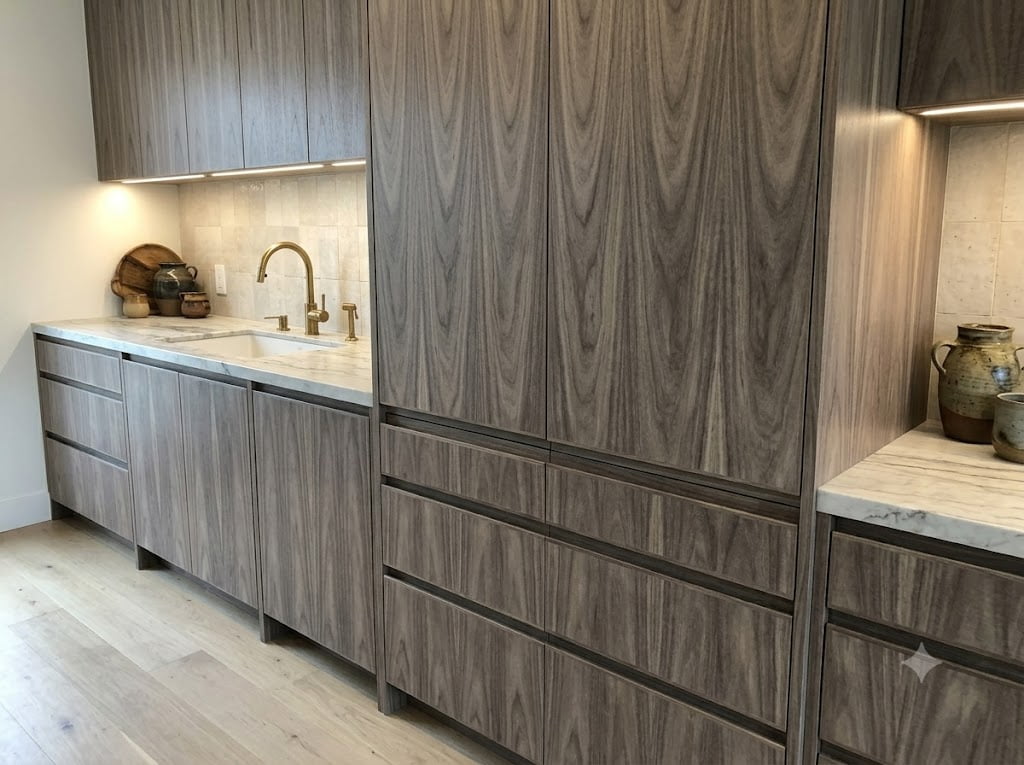
Rosa Morada vs Tzalam: Complete Mexican Hardwood Comparison for Furniture (2024 Guide)
Choosing between Rosa Morada and Tzalam represents a strategic decision for furniture manufacturers, cabinetmakers, and designers sourcing premium Mexican tropical hardwoods—selecting between distinctive pink-purple exoticism and sophisticated golden-brown elegance, between color-driven visual impact and grain-character richness. Both species originate from Mexico’s tropical and subtropical forests, offering superior hardness, excellent workability, and premium aesthetics unavailable in conventional temperate hardwoods. As a specialized Rosa Morada and Tzalam veneer manufacturer serving furniture producers, architectural millwork contractors, and interior designers throughout Mexico and international markets, we regularly guide clients through this comparison of two exceptional regional species.
This comprehensive Rosa Morada vs Tzalam wood comparison examines every decision factor—from color and grain characteristics to hardness, workability, availability, cost positioning, and ideal applications. Whether you’re designing luxury residential furniture, specifying materials for hospitality projects, developing product lines for export markets, or planning architectural millwork installations, understanding how these premium Mexican hardwoods compare enables strategic material selection aligned with design vision, performance requirements, budget parameters, and market positioning objectives.
- Overview: Rosa Morada and Tzalam Wood Species
- Visual Appearance Comparison
- Physical Properties: Rosa Morada vs Tzalam
- Workability and Fabrication Differences
- Best Applications: When to Choose Rosa Morada
- Best Applications: When to Choose Tzalam
- Cost and Availability Comparison
- Sourcing and Sustainability: Mexican Hardwood Considerations
- Frequently Asked Questions
- Source Premium Rosa Morada and Tzalam Materials
Overview: Rosa Morada and Tzalam Wood Species
Before examining detailed comparisons, understanding each species’ fundamental characteristics, origins, botanical relationships, and typical commercial forms establishes essential context for evaluating their respective advantages in furniture, cabinetry, and interior architectural applications.

Rosa Morada Characteristics and Origin
Rosa Morada (Peltogyne mexicana) grows in tropical and subtropical forests throughout southern Mexico, Guatemala, and Honduras, representing the northernmost species within the Peltogyne genus. While South American purplehearts (particularly Peltogyne spp. from Brazil, Suriname, and French Guiana) enjoy broader international recognition, Rosa Morada offers Mexican and Central American manufacturers a regionally-sourced alternative with similar purple pigmentation characteristics and superior availability within domestic markets.
The species’ common name—Spanish for “purple rose”—accurately describes its most distinctive characteristic: extraordinary pink, rose, and purple-brown coloration that develops through natural oxidation. Fresh-cut Rosa Morada displays lighter pink tones that deepen over days and weeks when exposed to air and UV light, developing rich purple-brown hues with persistent pink highlights. This color transformation occurs entirely naturally without chemical treatments, representing inherent pigmentation from organic compounds within the wood’s cellular structure.
Rosa Morada exhibits fine to medium texture with generally straight grain, though premium selections occasionally display subtle ribbon figure, slight interlocking, or irregular grain patterns that enhance visual interest without overwhelming the wood’s signature color. The species’ tight pore structure and relatively even grain distribution create naturally smooth surfaces that require minimal preparation before finishing, allowing clear topcoats to showcase exceptional color depth and saturation.
With a Janka hardness rating of approximately 1,780 lbf, Rosa Morada classifies as a moderately hard tropical hardwood—significantly harder than temperate species like walnut, cherry, or soft maple, comparable to hard maple, yet noticeably softer than Tzalam, hickory, or true South American purpleheart. This hardness provides excellent durability for furniture, cabinetry, countertops, and architectural millwork while maintaining good workability with standard woodworking equipment, CNC machining systems, and edge-banding machinery.
The species’ moderate density (specific gravity approximately 0.72-0.78) balances weight considerations with structural performance, creating furniture components and panels that feel substantial without becoming excessively heavy—particularly important for cabinet doors, drawers, and portable furniture items.
In commercial applications, Rosa Morada primarily appears as:
- Veneered plywood: 0.6mm-1.0mm face veneer on cabinet-grade substrates (MDF, particleboard, poplar plywood) for panels, cabinet doors, drawer fronts, and furniture components
- Decorative veneer sheets: Sliced veneer for architectural millwork, feature walls, reception desks, and custom furniture
- Solid lumber: Limited availability in select dimensions for specialty applications, edge details, and small-production runs
- Edge banding: Matching solid wood or veneer-backed edge tape for panel finishing and exposed edge treatment
Tzalam Characteristics and Origin
Tzalam (Lysiloma latisiliquum), also known as Tsalam, false tamarind, or Caribbean walnut, grows throughout Mexico’s Yucatan Peninsula, southern coastal regions, and extends into Central America and Caribbean islands. The species thrives in tropical dry forests and coastal zones, developing exceptional hardness and density through adaptation to challenging environmental conditions including drought periods, intense sun exposure, and occasional hurricane-force winds.
Tzalam produces heartwood ranging from golden tan to rich medium brown with distinctive dark brown to near-black streaking that creates dramatic visual contrast. This color combination—warm golden-brown base tones accented by irregular dark streaks—produces aesthetic effects reminiscent of premium walnut species, though with different grain character and generally lighter overall coloration. Fresh-cut Tzalam displays lighter golden tones that gradually deepen to richer brown hues through UV exposure and natural aging, developing enhanced warmth and color depth over months and years.
The species exhibits medium to coarse texture with grain patterns ranging from straight to highly interlocking and irregular. Premium Tzalam selections often display dramatic interlocking grain that creates ribbon figure, broken stripe patterns, and irregular grain direction changes that produce complex light reflection and rich visual depth. This grain character—more pronounced than Rosa Morada’s subtle patterns—becomes a defining aesthetic feature rather than background element, particularly when showcased through clear finishes or light stains that preserve natural color and figure.
With a Janka hardness rating of approximately 2,000-2,200 lbf, Tzalam ranks among Mexico’s hardest commercial furniture woods—significantly harder than Rosa Morada, comparable to hickory or hard maple, approaching true ironwood territory. This exceptional hardness provides outstanding durability for high-traffic commercial installations, restaurant tabletops, retail fixtures, and furniture applications requiring maximum resistance to wear, impact, and surface damage.
The species’ high density (specific gravity approximately 0.82-0.90) creates substantial weight that communicates quality and permanence in finished furniture while requiring consideration during fabrication, installation, and transportation. Heavy Tzalam panels and components may necessitate reinforced cabinet hardware, upgraded drawer slide systems, and careful structural planning for suspended or wall-mounted installations.
Tzalam’s sapwood—pale yellow to creamy white—contrasts dramatically with the dark heartwood, though furniture-grade material typically consists primarily or exclusively of heartwood to maintain color consistency across panels and matched sets.
In commercial applications, Tzalam appears as:
- Veneered plywood: Face veneer on cabinet-grade substrates for furniture, cabinetry, architectural millwork, and wall panels
- Decorative veneer sheets: Sliced veneer for high-end custom projects emphasizing grain character
- Solid lumber: More readily available than Rosa Morada in domestic Mexican markets for frame construction, structural components, and solid wood furniture
- Flooring: Solid and engineered flooring products leveraging exceptional hardness for commercial installations
- Exterior applications: Natural durability enables outdoor furniture, decking, and architectural elements with appropriate finishing
Visual Appearance Comparison
Aesthetics drive most Rosa Morada vs Tzalam decisions, as these Mexican hardwoods deliver fundamentally different visual strategies—color-driven impact versus grain-character richness. Understanding their appearance characteristics, design compatibility, and aesthetic positioning clarifies which species aligns with specific project vision and market positioning objectives.

Color: Pink-Purple vs Golden-Brown
Color represents the most immediately obvious difference in the Rosa Morada vs Tzalam comparison, determining primary visual impact and design compatibility:
Rosa Morada Color Profile:
- Fresh-cut appearance: Light pink, rose, with purple undertones
- Aged/finished appearance: Deep rose, purple-brown, burgundy with persistent pink highlights
- Color uniqueness: Pink-purple spectrum unavailable in Tzalam or any other Mexican commercial hardwood
- Sapwood: Pale yellow-white (excluded from furniture-grade selections)
- Color consistency: Moderate uniformity throughout heartwood with slight tonal variations
Comments