
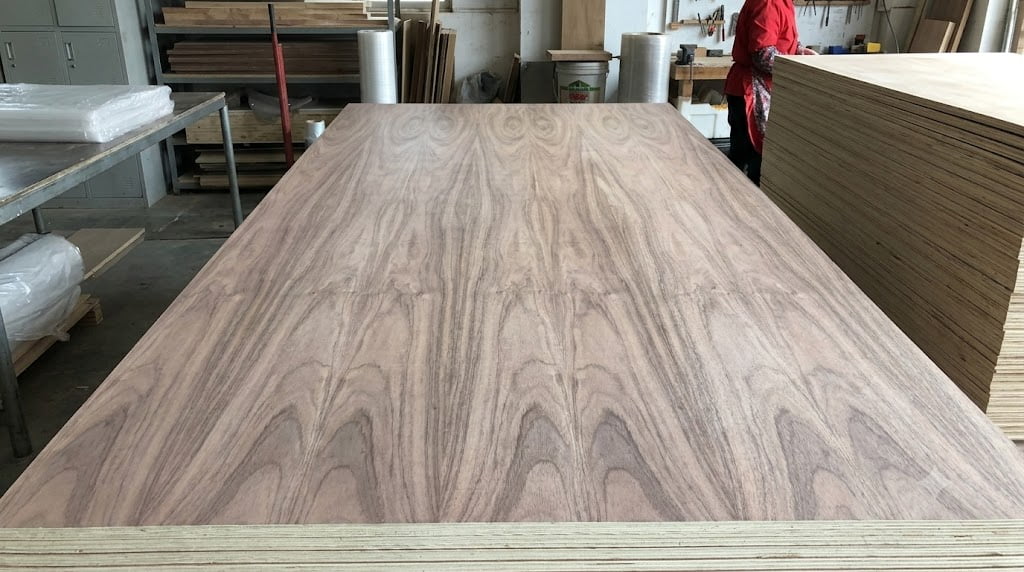
# Parota Plywood vs Walnut Plywood: Complete Species Comparison for High-End Applications
The premium hardwood plywood market serves discerning buyers across luxury residential construction, high-end furniture manufacturing, architectural millwork, boutique hospitality projects, yacht interiors, and custom cabinetry—applications where aesthetic distinction, material quality, craftsmanship visibility, and brand positioning justify premium pricing. In these elevated market segments, species selection transcends basic performance requirements to encompass sophisticated considerations: **visual impact and design signature, perceived luxury and exclusivity, cultural associations and style narratives, fabrication excellence, finishing potential, and strategic cost-value optimization.**
Within this premium tier, two species consistently attract specification by designers, architects, furniture makers, and luxury brands seeking warm-toned hardwoods with substantial visual character: **walnut plywood**—the long-established benchmark for luxury wood products in Western markets—and **parota plywood**—an emerging alternative from Latin America gaining traction among designers seeking distinctive aesthetics and value optimization. Both species occupy the warm-brown color spectrum, deliver rich visual presence, machine to exceptional quality, and support premium market positioning, yet they represent fundamentally different value propositions with distinct advantages, limitations, cost structures, and strategic fit for different applications and business models.
Despite both species’ growing specification in overlapping applications—luxury cabinetry, high-end furniture, architectural wall paneling, yacht interiors, executive office millwork, boutique retail environments—comprehensive comparative analysis addressing practical decision factors remains surprisingly limited. Buyers evaluating these premium options need answers to specific questions that directly impact project outcomes and business results: **How do aesthetic characteristics truly compare beyond superficial “both are brown” observations? What performance differences matter for specific applications? How do finishing requirements and results differ? What cost implications exist not just in material pricing but across the complete value chain—procurement, fabrication, finishing, installation? Which species delivers superior value for particular market segments, project types, and brand positioning strategies? What practical considerations—availability, supply chain reliability, sustainability—differentiate these options?**
This definitive comparison guide addresses these questions systematically, examining walnut and parota plywood across nine critical evaluation dimensions: aesthetic characteristics and design psychology, technical performance specifications, machining and fabrication properties, finishing requirements and achievable results, application-specific suitability analysis, market positioning and pricing structures, availability and sourcing dynamics, sustainability and environmental considerations, and strategic selection frameworks for different buyer types. Rather than simplistically declaring one species “better,” this analysis equips readers with sophisticated comparative intelligence to make informed species selections aligned with their specific requirements, market positioning, and value optimization objectives.
Whether you’re a **luxury furniture manufacturer** balancing brand positioning with margin pressure; an **architect or interior designer** creating distinctive environments while meeting project budgets; a **yacht interior specialist** requiring exceptional materials for demanding applications; a **high-end millwork fabricator** optimizing material costs without compromising quality reputation; an **importer or distributor** evaluating inventory investment in premium species; a **procurement professional** negotiating with international suppliers; or a **developer or property owner** specifying materials for luxury projects—this comprehensive resource provides the comparative framework for confident, sophisticated decision-making in the premium plywood market.
—
## Species Overview: Origins, Market Position, and Cultural Context
### Walnut (Juglans species)
**Primary Commercial Types:**
**1. American Black Walnut (Juglans nigra):**
**Geographic Origin:**
– **Primary range:** Eastern United States (Midwest, Ohio Valley, Appalachia)
– **Prime growing regions:** Indiana, Ohio, Missouri, Iowa, Kentucky
– **Secondary sources:** Eastern Canada (limited)
– **Plantation sources:** Emerging European walnut plantations supplying veneer
**Tree Characteristics:**
– **Growth rate:** Slow to moderate (80-150 years to premium quality)
– **Tree size:** Large tree; 30-40 meters height; trunk diameter 0.6-1.5 meters
– **Form:** Straight trunk with high branching; excellent lumber yields
– **Value progression:** Wood quality, color richness improve dramatically with age
**Market Position:**
– **Status:** Premier North American hardwood; top-tier luxury species
– **History:** Valued for centuries; American Colonial furniture tradition
– **Contemporary:** Global luxury standard; recognized worldwide
– **Pricing tier:** Premium (among most expensive commercial hardwoods)
**2. European Walnut (Juglans regia):**
**Geographic Origin:**
– **Traditional sources:** France, Italy, Turkey, Iran, Circassian region
– **Contemporary sources:** Expanded plantation growing across Europe
– **Character differences:** Generally lighter color, more figured, different grain than American
**Market Notes:**
– **Availability:** Limited compared to American black walnut
– **Pricing:** Premium to super-premium (often exceeds American black walnut)
– **Applications:** High-end furniture, gun stocks, luxury items
– **Market scope:** This comparison focuses primarily on American black walnut (dominant plywood species)
**Cultural and Market Significance:**
**Historical Prestige:**
– **Furniture heritage:** Walnut dominated high-style furniture 1600s-1800s (before mahogany)
– **American craftsmanship:** Iconic wood of American furniture making tradition
– **European luxury:** Prized for aristocratic furniture, palace interiors
– **Gun stocks:** Traditional choice for fine firearms (strength, beauty, stability)
**Contemporary Market Position:**
**Luxury Benchmark:**
– **Universal recognition:** Consumers globally recognize walnut as premium species
– **Design standard:** Default choice for high-end residential, office, hospitality
– **Brand association:** Signals quality, taste, investment value
– **Price justification:** Premium price widely accepted, expected
**Market Segments:**
– **Residential luxury:** Kitchen cabinetry, built-ins, wall paneling in high-end homes
– **Furniture manufacturing:** Bedroom suites, dining tables, case goods, contemporary designs
– **Office environments:** Executive offices, boardrooms, reception areas
– **Automotive/yacht:** Interior panels, trim in luxury vehicles, yacht cabins
– **Retail luxury:** Apple Store tables, high-end retail fixtures, jewelry displays
### Parota (Enterolobium cyclocarpum)
**Geographic Origin and Distribution:**
**Native Range:**
– **Primary sources:** Mexico (Pacific coast, Yucatan), Central America
– **Growing regions:** Guatemala, Honduras, Costa Rica, El Salvador
– **Climate:** Tropical/subtropical; elevations 0-1200 meters
– **Plantation development:** Expanding Mexican commercial forestry
**Tree Characteristics:**
– **Growth rate:** Fast to moderate (20-40 years to commercial size)
– **Tree size:** Very large; 25-40 meters height; massive trunk 1-3 meters diameter
– **Form:** Wide-spreading crown; impressive specimen tree
– **Sustainability advantage:** Faster regeneration than slow-growing premium hardwoods
**Market Position:**
**Emerging Premium Alternative:**
– **Market development:** Growing exports to U.S., Canada, Europe since 2010s
– **Positioning:** Mid-to-upper premium tier (below walnut, above oak)
– **Recognition:** Increasing designer awareness; still building consumer familiarity
– **Opportunity:** Value optimization play for premium aesthetics at lower cost
**Alternative Names and Marketing:**
– **Trade names:** “Mexican walnut” (misleading—not botanically related to true walnut)
– **Common names:** Guanacaste, parota wood, elephant ear tree
– **Marketing challenge:** Building brand recognition without established heritage
– **Positioning strategy:** “Affordable luxury,” “sustainable alternative,” “distinctive character”
**Cultural Context:**
**Traditional Heritage:**
– **Local use:** Traditional furniture, construction in Mexico, Central America
– **Artisan tradition:** Hand-carved furniture, decorative items
– **Cultural significance:** Shade tree in town squares; community gathering places
– **Contemporary rediscovery:** Renewed appreciation for indigenous species
**Market Development Trajectory:**
**Growth Drivers:**
– **Design trends:** Preference for warm, natural, organic aesthetics
– **Cost pressure:** High-end market seeking value without visible compromise
– **Sustainability:** Interest in faster-growing alternatives to traditional species
– **Distinctiveness:** Designers seeking unique alternatives to ubiquitous species
**Current Market Penetration:**
– **Geography:** Strongest in U.S. Southwest, California, Texas; growing nationally
– **Applications:** Contemporary furniture, resort/hospitality, residential high-end
– **Brand adoption:** Boutique furniture makers, custom builders, design-conscious buyers
– **Challenge:** Building broader market recognition beyond early adopters
—
## Visual Comparison: Aesthetic Characteristics and Design Psychology
For premium applications where aesthetics drive specification and justify premium pricing, understanding nuanced visual differences between species is critical to selection decisions.
### Color Characteristics: Detailed Analysis
**Walnut Plywood:**
**Color Profile:**
**Heartwood (Primary Appearance):**
– **Base color:** Rich chocolate brown to dark purple-brown
– **Tone range:** Medium-dark brown to very dark brown (nearly black in old-growth)
– **Undertones:** Purple, gray, sometimes greenish cast
– **Depth:** Substantial color depth; rich, luxurious appearance
– **Variation:** Moderate variation within individual trees; significant batch variation
**Sapwood (Generally Excluded from Premium Grades):**
– **Color:** Pale cream to light tan
– **Use:** Typically excluded from face veneers or limited to backing veneers
– **Premium grades:** Minimize or eliminate sapwood for color consistency
**Color Complexity:**
– **Streaking:** Dark brown streaks running through lighter brown background
– **Mineral streaks:** Gray-black mineral deposits (common; sometimes undesirable)
– **Color bands:** Distinct color transitions between growth zones
– **Overall effect:** Complex, sophisticated coloration
**Visual Temperature:**
– **Warmth level:** Moderate-warm (brown base) but cooled by gray/purple undertones
– **Overall feel:** Sophisticated, refined, not overtly warm
– **Psychological association:** Elegant, serious, professional, timeless
**Color Evolution Over Time:**
**Initial Appearance:**
– **Fresh-cut:** Can show purple-gray tones prominently
– **After finishing:** Color deepens, purple tones often diminish
– **Variation:** Finishing method significantly impacts color appearance
**Long-Term Changes:**
– **UV exposure:** Lightens gradually (opposite of most woods)
– **Oxidation:** Purple tones fade; color becomes more uniform brown
– **Darkening:** Despite lightening from UV, overall trend is richer, more uniform color
– **Timeframe:** Color evolution occurs over years; eventual stable medium-brown
**Parota Plywood:**
**Color Profile:**
**Heartwood:**
– **Base color:** Golden brown to rich caramel brown; medium-dark tones
– **Tone range:** Light golden-tan to tobacco brown
– **Undertones:** Honey, amber, golden yellow—purely warm spectrum
– **Depth:** Substantial richness without heaviness of walnut
– **Variation:** Moderate variation within panels; regional differences between sources
**Sapwood (Often Excluded or Positioned Strategically):**
– **Color:** Pale cream to light tan
– **Use:** Sometimes included at panel edges; typically minimized in premium grades
– **Contrast:** Less dramatic sapwood-heartwood contrast than walnut
**Color Complexity:**
– **Streaking:** Golden highlights alternating with deeper brown bands
– **Figured areas:** Swirling grain produces color-shift effects (chatoyance)
– **Overall effect:** Warm, inviting, luminous quality
**Visual Temperature:**
– **Warmth level:** High—among warmest brown hardwoods available
– **Overall feel:** Inviting, approachable, organic, natural
– **Psychological association:** Resort luxury, organic modern, natural wellness, tropical elegance
**Color Evolution Over Time:**
**Initial Appearance:**
– **Fresh-cut:** Lighter golden tones; bright appearance
– **After finishing:** Immediately deepens; oil finishes dramatically enrich color
– **Variation:** Less finishing impact than walnut; color more inherent
**Long-Term Changes:**
– **UV exposure:** Gradually darkens and enriches (opposite of walnut)
– **Oxidation:** Develops attractive patina; golden tones mature to deeper caramel
– **Enhancement:** Color improves with age; becomes richer, more luxurious
– **Timeframe:** Noticeable enrichment within first year; continues gradually
**Comparative Color Analysis:**
**Side-by-Side Color Position:**
“`
LIGHT ←———————————————————————————————→ DARK
Parota (Golden-Brown) ————————— Walnut (Dark Chocolate-Brown)
↑ ↑
Medium-Dark Dark-Very Dark
Warm Undertones Cool-Neutral Undertones
“`
**Psychological Impact:**
| **Attribute** | **Walnut** | **Parota** |
|————–|———–|———–|
| **Formality** | High (sophisticated, executive) | Moderate (refined but approachable) |
| **Warmth** | Moderate (sophisticated warmth) | High (inviting, cozy) |
| **Modernity** | High (contemporary luxury) | Very High (organic contemporary) |
| **Traditional** | High (established luxury) | Low (fresh, non-traditional) |
| **Visual Weight** | Heavy (dark, substantial) | Moderate (rich without heaviness) |
| **Luxury Signaling** | Immediate (universally recognized) | Subtle (connoisseur choice) |
**Design Application Implications:**
**Walnut Color Advantages:**
✅ **Luxury signaling:** Color immediately communicates premium positioning
✅ **Sophistication:** Dark, complex color creates refined atmosphere
✅ **Versatility:** Neutral undertones coordinate with modern, traditional, transitional
✅ **Contrast:** Dark color creates dramatic contrast with light materials (marble, light woods)
✅ **Executive presence:** Conveys authority, seriousness, established success
✅ **Timelessness:** Color associations deeply established; won’t appear dated
**Parota Color Advantages:**
✅ **Warmth:** Adds significant warmth to contemporary interiors (concrete, glass, metal, white)
✅ **Lightness:** Avoids heaviness of dark woods; keeps spaces feeling open
✅ **Resort aesthetic:** Evokes luxury vacation properties, boutique hotels, wellness spaces
✅ **Natural organic:** Supports biophilic design, natural materials trends
✅ **Distinctive:** Less common color offers differentiation from ubiquitous walnut
✅ **Aging:** Improves with time rather than fading like walnut
**Space Impact Considerations:**
**Small Spaces:**
– **Walnut:** Can make small spaces feel smaller, darker; use strategically as accent
– **Parota:** Maintains openness; suitable for larger surface areas in compact spaces
**Large Spaces:**
– **Walnut:** Creates sophisticated, grounded atmosphere; prevents spaces from feeling cold
– **Parota:** Adds warmth without overwhelming; maintains bright, airy feeling
**Natural Light Levels:**
**Low Natural Light:**
– **Walnut:** Can appear very dark, heavy; requires artificial lighting consideration
– **Parota:** Maintains visibility, doesn’t absorb light; better for dim spaces
**High Natural Light:**
– **Walnut:** Beautiful with natural light; purple tones visible; will gradually lighten
– **Parota:** Glows in natural light; chatoyance effect enhanced; will gradually darken/enrich
### Grain Pattern, Figure, and Visual Character
**Walnut Plywood:**
**Grain Structure:**
**Primary Characteristics:**
– **Grain type:** Generally straight to slightly interlocked
– **Pattern regularity:** Moderate consistency; predictable overall appearance
– **Grain prominence:** Moderate—grain visible but not dominant visual feature
– **Color/grain relationship:** Color variation often more prominent than grain pattern
**Figure Types (Cut-Dependent):**
**Plain-Sawn (Flat-Cut) Walnut:**
– **Pattern:** Cathedral grain (arched growth ring patterns)
– **Visual activity:** Moderate; gentle curves
– **Color variation:** Alternating light/dark bands follow grain
– **Availability:** Most common; standard commercial grade
– **Cost:** Baseline pricing
**Quarter-Sawn Walnut:**
– **Pattern:** Straight, linear grain with ray fleck
– **Visual activity:** Lower; uniform, refined appearance
– **Figure:** Subtle ribbon figure in some panels
– **Availability:** Limited; not commonly produced in quantity
– **Cost:** 30-50% premium when available
**Figured Walnut (Special Selections):**
**Types:**
– **Crotch figure:** Dramatic feather/flame patterns from tree fork areas
– **Burl:** Highly figured swirling patterns from burl growths
– **Curly/fiddleback:** Narrow ripple figure across grain (rare in walnut)
– **Availability:** Very limited; specialty veneer suppliers
– **Cost:** Super-premium (2-4x standard walnut)
**Visual Activity Level:**
– **Overall:** Moderate to moderate-high depending on cut and figure
– **Grain vs. color:** Color variation provides much visual interest; grain secondary
– **Predictability:** High—walnut appearance well-established, consistent
**Parota Plywood:**
**Grain Structure:**
**Primary Characteristics:**
– **Grain type:** Interlocked grain (grain direction alternates in successive growth layers)
– **
Comments