
Why Walnut Spliced Veneer is Ideal for Doors, Panels and Cabinets
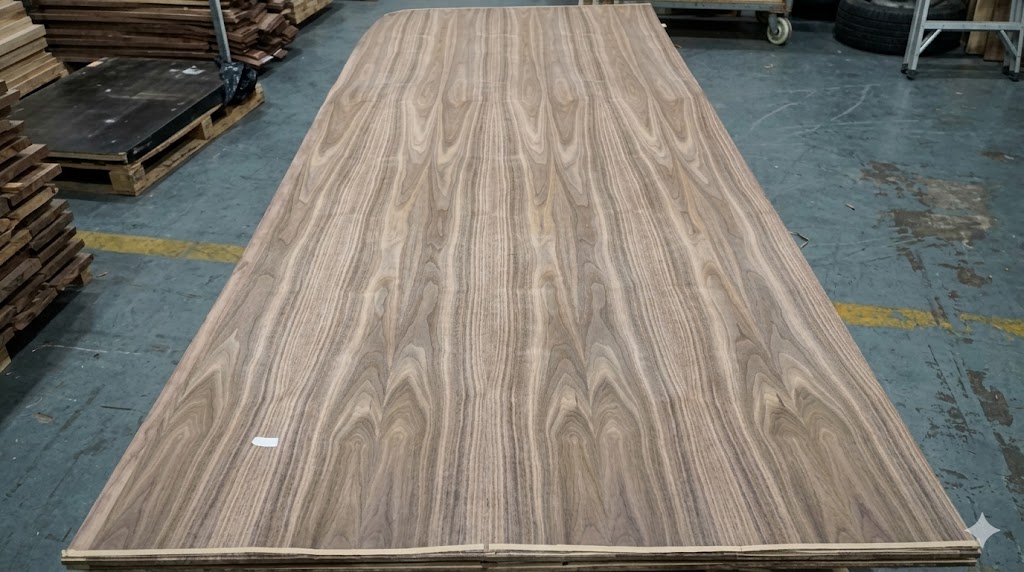
Walnut spliced veneer has become the preferred material choice for cabinet manufacturers, door producers, and architectural millwork companies seeking cost-effective solutions for large-format applications without compromising aesthetic quality. As a leading walnut spliced veneer manufacturer and supplier, we understand that modern furniture production and interior design projects require materials that balance visual impact, dimensional capabilities, and production efficiency. Spliced veneer technology addresses these requirements by creating seamless large-format panels from carefully matched veneer pieces—delivering the rich appearance of premium walnut at a fraction of the cost of whole-piece veneer.
Whether you’re manufacturing kitchen cabinets, architectural wall panels, or interior door systems, walnut spliced veneer provides the dimensional flexibility and grain continuity essential for professional results. This comprehensive guide explains why spliced veneer has become the industry standard for doors, panels, and cabinetry, covering the manufacturing process, application advantages, and technical specifications that B2B buyers need to make informed sourcing decisions.
- What is Walnut Spliced Veneer?
- Why Choose Walnut Spliced Veneer Over Whole Piece Veneer
- Walnut Spliced Veneer for Cabinet Doors
- Walnut Spliced Veneer for Wall Panels
- Walnut Spliced Veneer for Interior Doors
- Technical Specifications and Size Options
- Quality Standards and Grading
- Custom Walnut Spliced Veneer Manufacturing
- Frequently Asked Questions
What is Walnut Spliced Veneer?
Walnut spliced veneer refers to large-format veneer panels created by precision-joining individual walnut veneer leaves along their edges to form seamless sheets wider than naturally available whole-piece veneer. This manufacturing technique enables production of panels up to 10 feet wide or longer—dimensions impossible to achieve with single-piece veneer from even the largest walnut logs. The splicing process utilizes advanced edge-joinery methods and careful grain matching to create virtually invisible seam lines, producing panels that appear as continuous wood surfaces to the eye.

The base material consists of Juglans nigra (American Black Walnut) or Juglans regia (European Walnut) veneer sliced to 0.5mm-0.6mm thickness using plain slicing, quarter slicing, or rotary cutting methods. Individual veneer leaves typically measure 8-12 inches wide as sliced from logs. Through precision splicing, these narrow leaves are joined to create panels 24 inches, 48 inches, or wider—meeting the dimensional requirements of modern cabinet doors, wall panels, and architectural applications that would be prohibitively expensive using whole-piece veneer.
The Splicing Process Explained
Professional walnut veneer splicing involves multiple precision steps to ensure seamless joints and aesthetic continuity:
Step 1 – Veneer Selection: Leaves are carefully selected for color consistency, grain pattern, and figure characteristics. Manufacturing specialists group leaves from the same log section (flitch) to maintain natural color and grain harmony across the finished panel.
Step 2 – Edge Preparation: Veneer edges are precision-trimmed using specialized guillotine cutters or laser systems, creating perfectly straight edges at exact 90-degree angles. Edge quality directly impacts seam visibility in finished panels—premium spliced veneer features edges trimmed to tolerances of ±0.1mm.
Step 3 – Matching Arrangement: Leaves are arranged according to the specified matching pattern (book match or slip match) to create desired grain flow and visual symmetry. This step requires skilled judgment to balance grain pattern, color consistency, and natural character variations.
Step 4 – Splicing Application: Prepared leaves are joined using specialized splicing tape applied to the face or back of the veneer. Modern manufacturing utilizes water-activated paper tape or heat-activated film that creates strong bonds while remaining nearly invisible after finishing. Alternative methods include edge-gluing with precise adhesive application along joint lines.
Step 5 – Backing Application: Spliced face veneer is bonded to paper, fleece, or phenolic backing materials to create dimensionally stable panels ready for application to substrate materials. Backing prevents splitting during handling and installation while maintaining panel flatness during storage and transportation.
Book Matching vs Slip Matching
Book Matching creates symmetrical grain patterns by arranging consecutive veneer leaves as mirror images—similar to opening pages of a book. Alternate leaves are flipped face-to-back, creating a centerline with grain patterns radiating outward in symmetrical fashion. This technique produces dramatic visual effects particularly striking in walnut veneer, where natural color variation and grain figure create butterfly-wing patterns across panel centers. Cabinet manufacturers specify book-matched walnut spliced veneer for high-end door fronts and feature panels where visual impact is paramount.

Slip Matching arranges consecutive leaves in the same orientation without flipping, creating repeating grain patterns that flow continuously across the panel width. This technique produces more subtle visual effects with grain running predominantly in one direction. Slip matching optimizes material utilization and creates consistent appearance preferred for contemporary cabinet designs, wall panel systems, and applications where grain uniformity outweighs dramatic pattern effects. The technique also minimizes color variation since all leaves present the same face orientation.
Why Choose Walnut Spliced Veneer Over Whole Piece Veneer
Walnut spliced veneer offers compelling advantages over whole-piece veneer that make it the economically rational choice for the majority of door, panel, and cabinet applications. Understanding these benefits enables procurement managers and production planners to optimize material specifications while maintaining quality standards and controlling costs.

Size Flexibility: The most significant advantage of spliced veneer lies in dimensional capabilities. While whole-piece walnut veneer rarely exceeds 12 inches in width due to log diameter limitations, spliced veneer panels are manufactured to any practical width—commonly 24″, 48″, 60″, or custom dimensions up to 10+ feet. This enables single-piece coverage of cabinet doors, wall panels, and door slabs without visible seam lines within the finished component. Large-format capability eliminates the need for field-splicing during installation, reducing labor costs and improving finished quality.
Cost Efficiency: Spliced veneer typically costs 30-50% less than equivalent whole-piece veneer in widths exceeding 8 inches. The cost advantage stems from efficient utilization of narrow veneer leaves that represent the bulk of veneer production from typical log sizes. Wide whole-piece veneer commands premium pricing due to scarcity—requiring large-diameter logs and generating significant waste during processing. For high-volume cabinet and door manufacturing, this cost differential translates to substantial material savings without compromising aesthetic quality.
Consistent Availability: Spliced veneer production benefits from stable raw material supply since manufacturing utilizes standard-width veneer leaves readily available from regular log processing. Whole-piece veneer in premium widths faces supply inconsistency due to dependence on large-diameter logs subject to market fluctuations and resource limitations. Reliable supply enables production planning confidence essential for large-scale projects and contract manufacturing commitments.
Controlled Grain Matching: Modern splicing techniques provide greater control over grain pattern and color consistency than whole-piece veneer, where natural variations are inherent to individual leaves. Splicing allows manufacturers to select and arrange leaves for optimal color harmony and grain flow, producing panels with superior visual consistency compared to random whole-piece veneer selections. This controlled matching is particularly valuable for projects requiring multiple panels with coordinated appearance.
Reduced Waste: Splicing technology optimizes material utilization by incorporating narrower veneer leaves that might otherwise be downgraded or wasted in whole-piece applications. This efficiency reduces overall material costs and supports sustainability objectives increasingly important to commercial buyers and end-user clients.
Walnut Spliced Veneer for Cabinet Doors
Cabinet door manufacturing represents the largest single application for walnut spliced veneer, driven by the material’s perfect alignment with door production requirements: dimensional consistency, cost efficiency, and aesthetic quality. Kitchen cabinet manufacturers, bathroom vanity producers, and office furniture companies specify spliced veneer for both flat panel doors and raised panel applications where large, seamless surfaces are essential.

Flat Panel Doors (Slab Doors): Modern frameless cabinet construction relies heavily on large slab doors where spliced veneer provides optimal coverage without visible joints within door dimensions. Standard sizes (18″x30″, 24″x36″, etc.) fall comfortably within spliced panel capabilities, enabling single-piece door fabrication. Book-matched spliced veneer creates symmetrical patterns particularly attractive in contemporary kitchen designs where door fronts serve as focal design elements. The consistent thickness and backing stability of quality spliced veneer simplifies edge-banding and finishing operations critical to slab door production efficiency.
Raised Panel Doors: Traditional cabinet styles utilize raised panel construction where center panels are framed by solid wood stiles and rails. Walnut
Comments