
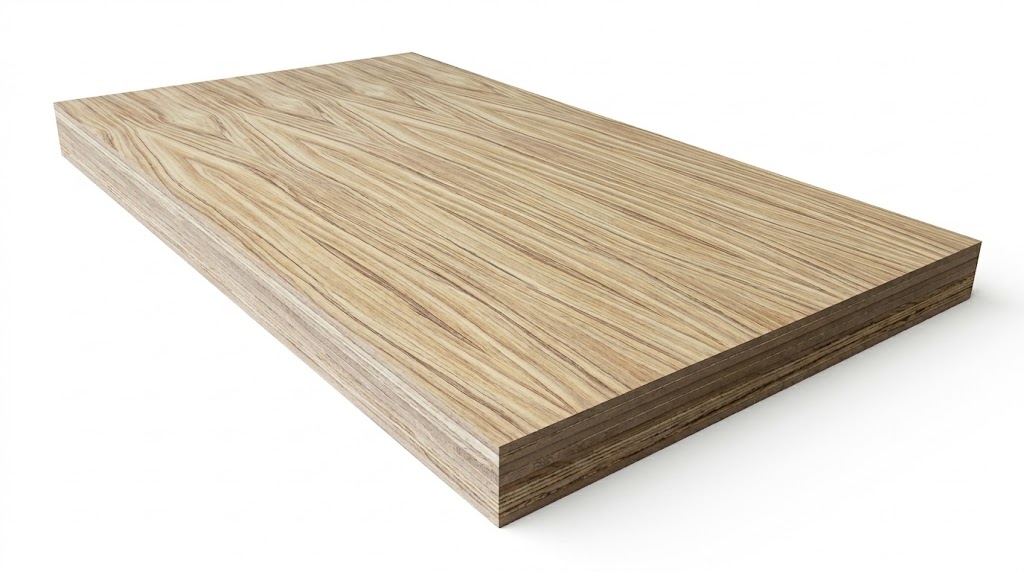
What is Parota Plywood? Complete Guide to This Premium Mexican Wood Panel
## Introduction
If you’re a furniture manufacturer, interior designer, or wood product importer in Mexico or serving the Latin American market, you’ve likely encountered the term **”Parota plywood”** in supplier catalogs, design specifications, or customer requests. But what exactly is Parota plywood, and why has it become one of the most sought-after wood panel materials in the Mexican and Central American markets?
Here’s the challenge: Despite growing demand, there’s significant confusion in the marketplace. Some suppliers offer “Parota plywood” that’s merely Parota-faced veneer over inferior cores. Others use the term loosely to describe any tropical hardwood plywood with similar coloring. Meanwhile, buyers struggle to differentiate between genuine Parota plywood and look-alike alternatives.
For furniture manufacturers in Guadalajara, cabinetry shops in Monterrey, or importers serving the U.S. Hispanic market, understanding what Parota plywood actually is—its composition, grades, applications, and sourcing considerations—is critical for making informed purchasing decisions and delivering quality products to customers.
This comprehensive guide demystifies Parota plywood, explaining everything from the botanical origins of Parota wood to manufacturing processes, quality specifications, market applications, and sourcing strategies. Whether you’re considering Parota plywood for your first project or looking to optimize your current supply chain, you’ll gain the knowledge needed to make confident, profitable decisions.
—
## Understanding Parota: The Source Wood
### What is Parota Wood?
Before understanding Parota plywood, it’s essential to know the source material:
**Botanical Identity:**
– **Scientific name:** *Enterolobium cyclocarpum*
– **Family:** Fabaceae (Legume/Pea family)
– **Common names:** Parota, Guanacaste, Orejón, Elephant Ear Tree, Monkey Ear Tree
– **Native range:** Southern Mexico through Central America to northern South America
**Why “Parota”?**
The name “Parota” is primarily used in Mexico, while “Guanacaste” is more common in Central America (it’s the national tree of Costa Rica). In the wood industry, both terms often refer to the same species.
### Natural Characteristics of Parota Wood
**Visual Properties:**
**Color Palette:**
– **Heartwood:** Rich golden brown to deep chocolate brown
– **Sapwood:** Pale yellowish-white (typically excluded in quality products)
– **Color variation:** Natural variation adds character and uniqueness
– **Aging:** Darkens to warm reddish-brown tones with UV exposure
– **Grain pattern:** Generally straight to slightly interlocked, sometimes wavy
– **Figure:** May display attractive striping, occasional burl or crotch figure
**Physical Properties:**
| Property | Specification |
|———-|—————|
| **Average Dried Density** | 450-550 kg/m³ (28-34 lb/ft³) |
| **Janka Hardness** | 800-950 lbf (moderate) |
| **Bending Strength** | Moderate to good |
| **Dimensional Stability** | Good when properly dried |
| **Durability (Decay)** | Moderate; requires protection in exterior use |
| **Workability** | Excellent; easy to cut, shape, and finish |
**Texture and Feel:**
– Medium to coarse texture
– Natural luster when finished
– Smooth to touch when properly sanded
– Open grain structure (benefits from grain filler for high-gloss finishes)
### Cultural and Market Significance
**Why Parota Resonates in Mexican Markets:**
1. **Native Heritage:**
– Indigenous to Mexico and Central America
– Traditional use in colonial-era furniture and construction
– Cultural connection to Mexican craftsmanship
2. **Aesthetic Appeal:**
– Warm, inviting color palette
– Natural beauty without staining
– Complements rustic and contemporary Mexican design trends
– “Live edge” slabs highly prized for artisanal furniture
3. **Sustainable Identity:**
– Fast-growing tree (relative to many hardwoods)
– Increasingly from plantation and managed forest sources
– Lower carbon footprint than imported exotic woods
– Supports local economies in growing regions
4. **Market Positioning:**
– Premium appearance without ultra-premium pricing
– Differentiates products in competitive markets
– Appeals to eco-conscious consumers
– “Hecho en México” authenticity
—
## What Exactly is Parota Plywood?
### Definition and Construction
**Parota plywood** is an engineered wood panel product consisting of thin layers (veneers) of wood glued together, with at least the face veneer(s) made from Parota wood (*Enterolobium cyclocarpum*).
**Basic Structure:**
**Standard Construction (Cross-banded):**
1. **Face veneer:** Parota wood (decorative, visible surface)
2. **Core veneers:** Multiple layers, grain alternating 90° between layers
3. **Back veneer:** May be Parota or alternative species (depending on grade)
**Number of Plies (Layers):**
– Varies by thickness: 3-ply (thin panels) to 13+ ply (thick panels)
– Common: 5-ply (6-9mm), 7-ply (12-15mm), 9-ply (18mm)
**Typical Thickness Range:**
– **Thin:** 3mm, 4mm, 5mm, 6mm
– **Medium:** 9mm, 12mm, 15mm
– **Standard furniture:** 18mm (most common)
– **Heavy-duty:** 21mm, 25mm
### Types of Parota Plywood by Core Composition
Not all Parota plywood is created equal. The core material significantly affects performance, cost, and application suitability:
#### **1. All-Parota Plywood (Premium)**
**Construction:**
– Face, core, and back all made from Parota veneers
– Consistent density throughout
– Uniform appearance on cut edges
**Advantages:**
– ✅ Best screw-holding capacity
– ✅ Consistent density for machining
– ✅ Attractive edge appearance (no core contrast)
– ✅ Uniform staining and finishing behavior
– ✅ Authentic “all Parota” marketing claim
**Disadvantages:**
– ❌ Highest cost option (40-60% premium over mixed-core)
– ❌ Limited availability
– ❌ Heavier than mixed-core alternatives
**Best Applications:**
– High-end furniture with exposed edges
– Premium cabinetry
– Projects requiring visible edge profiles
– Luxury residential and boutique commercial interiors
**Market Reality:** True all-Parota plywood is relatively rare and expensive. Most “Parota plywood” uses alternative core materials.
#### **2. Parota Face with Hardwood Core (Standard)**
**Construction:**
– Face veneer(s): Parota
– Core veneers: Eucalyptus, Poplar, mixed tropical hardwoods, or similar
– Back veneer: May be Parota or matching core species
**Advantages:**
– ✅ Good balance of cost and performance
– ✅ Adequate strength for most furniture applications
– ✅ Better availability than all-Parota
– ✅ Lighter weight than all-Parota (shipping cost benefit)
– ✅ Widely available from Asian and Latin American manufacturers
**Disadvantages:**
– ⚠️ Edge appearance shows core species (requires edge banding)
– ⚠️ Slightly lower screw-holding than all-Parota
– ⚠️ Core species quality varies by manufacturer
**Best Applications:**
– General furniture manufacturing
– Cabinetry (with edge banding)
– Interior panels and millwork
– Commercial furniture
– Cost-conscious quality projects
**Market Reality:** This represents approximately 70-80% of “Parota plywood” sold in the Mexican market. Most suitable for the majority of applications.
#### **3. Parota Face with Softwood Core (Economy)**
**Construction:**
– Face veneer(s): Parota
– Core veneers: Pine, Fir, or mixed softwoods
– Back veneer: Typically softwood or lower-grade Parota
**Advantages:**
– ✅ Lowest cost option (20-30% below hardwood core)
– ✅ Very lightweight (handling and shipping benefits)
– ✅ Adequate for low-stress applications
**Disadvantages:**
– ❌ Lower screw-holding capacity
– ❌ Less durable for high-use furniture
– ❌ More susceptible to edge damage
– ❌ May telegraph core imperfections through face veneer
– ❌ Not suitable for structural applications
**Best Applications:**
– Budget furniture lines
– Non-structural panels
– Decorative wall panels
– Temporary or light-duty furniture
– Price-sensitive markets
**Caution:** Some suppliers offer this as standard “Parota plywood” without disclosing the softwood core. Always specify core material requirements in purchase orders.
#### **4. Parota Face with Composite Core (Emerging)**
**Construction:**
– Face veneer(s): Parota
– Core: MDF (Medium Density Fiberboard) or particle board
– Back veneer: Parota veneer or melamine
**Advantages:**
– ✅ Extremely flat and dimensionally stable
– ✅ No core voids or gaps
– ✅ Uniform density for machining
– ✅ Good for CNC routing and profiling
– ✅ Competitive pricing
**Disadvantages:**
– ❌ Heavier than veneer-core plywood
– ❌ Limited moisture resistance (unless using moisture-resistant MDF)
– ❌ Edge must be sealed (exposed MDF absorbs moisture)
– ❌ Lower screw-holding than veneer-core plywood
**Best Applications:**
– Furniture with complex CNC profiles
– Painted cabinetry (Parota face for select panels)
– Indoor furniture in climate-controlled environments
– Flush doors and panels
**Market Status:** Growing segment, particularly from Asian manufacturers serving Mexican importers.
—
## Manufacturing Process: How Parota Plywood is Made
Understanding the manufacturing process helps you assess quality and identify potential issues:
### Step 1: Log Selection and Preparation
**Quality Starts Here:**
– **Log sourcing:** Plantation-grown vs. natural forest (affects sustainability claims)
– **Log diameter:** Larger logs yield wider, more consistent veneers
– **Log conditioning:** Logs soaked or steamed to soften wood for peeling
– **Debarking:** Outer bark removed mechanically
**Quality Indicator:** Premium manufacturers carefully select logs for color consistency and minimal defects.
### Step 2: Veneer Peeling (Rotary Cutting)
**Process:**
– Logs mounted on large lathe
– Sharp blade peels continuous veneer sheet as log rotates
– **Typical veneer thickness:** 0.3mm to 3.0mm (face veneers typically 0.4-0.6mm for Parota)
**Alternative Methods:**
– **Slicing:** For decorative veneers with specific grain patterns (rare for Parota plywood)
– **Sawing:** For highly figured wood (not common for commodity plywood)
**Quality Factor:** Consistent veneer thickness ensures uniform pressing and minimal telegraphing of core defects.
### Step 3: Veneer Drying
**Critical Process:**
– Wet veneers dried to target moisture content (typically 6-10%)
– **Method:** Continuous roller dryers or batch dryers
– **Temperature control:** Prevents case-hardening or over-drying
– **Target moisture:** 8-10% for Mexican climate zones
**Why It Matters:** Improper drying causes warping, checking, and delamination in finished panels.
### Step 4: Veneer Grading and Sorting
**Face Veneer Selection:**
– Sorted by color, grain pattern, and defects
– **Grade A:** Minimal defects, uniform color
– **Grade B:** Small knots, slight color variation
– **Grade C:** Larger knots, patches, color variation
**Core Veneer Assessment:**
– Structural integrity more important than appearance
– Defects patched with veneer patches or plugs
### Step 5: Veneer Repair and Patching
**Quality Control:**
– Knots and defects removed
– Patches (similar color and grain) inserted
– Lower grades may use synthetic putty fills
**Indicator of Quality:**
– **Premium:** Tight-fitting wood patches with grain matching
– **Standard:** Wood patches, color may vary slightly
– **Economy:** Putty fills that may show through face veneer
### Step 6: Glue Application
**Adhesive Types:**
**Urea-Formaldehyde (Interior Grade):**
– Most economical
– Dry-use only
– **Formaldehyde emissions:** E1 or E0 standard critical
**Melamine-Urea (Moisture Resistant – MR):**
– Moderate moisture resistance
– Suitable for Mexican interior applications
– Good balance of cost and performance
**Phenol-Formaldehyde (Water and Boil Proof – WBP):**
– Exterior grade
– Best moisture and heat resistance
– Required for coastal climates and outdoor furniture
– Higher cost
**Application Method:**
– Glue spread on core veneers
– Precise control of glue quantity (affects cost and quality)
– Even distribution critical for strong bonds
### Step 7: Panel Layup and Pressing
**Assembly:**
– Veneers stacked with grain direction alternating 90°
– Face and back veneers oriented for appearance
– Assembled “lay-up” placed in hot press
**Hot Pressing:**
– **Temperature:** 110-140°C (depending on glue type)
– **Pressure:** 10-15 kg/cm²
– **Duration:** 3-8 minutes per mm of thickness
– **Purpose:** Cures adhesive, bonds veneers into solid panel
**Quality Impact:**
– **Insufficient pressure:** Weak bonds, delamination risk
– **Excessive pressure:** Veneer crushing, telegraphing
– **Uneven pressure:** Localized weak spots
– **Temperature variance:** Inconsistent cure, bond strength variation
### Step 8: Trimming and Sizing
**Process:**
– Pressed panels removed from press
– Edges trimmed to remove press marks and achieve final dimensions
– Panels cut to standard sizes (1220x2440mm most common)
– **Tolerance:** Quality panels maintain ±3mm on length/width
### Step 9: Sanding
**Surface Preparation:**
– **Rough sanding:** 60-80 grit removes press marks
– **Fine sanding:** 100-150 grit for furniture-ready surface
– **Premium sanding:** 180-220 grit for high-end applications
**Sanding Quality Affects:**
– Surface smoothness and finish readiness
– Veneer thickness (over-sanding reduces face veneer)
– Cost (finer sanding requires more time and abrasives)
### Step 10: Quality Control and Grading
**Inspection Points:**
– Visual grading of face and back
– Moisture content testing
– Dimensional tolerance checking
– Glue bond testing (sample basis)
– Formaldehyde emission testing (batch certification)
**Grading Assignment:**
– Panels sorted into quality grades
– Marking and labeling
– **Premium manufacturers:** Third-party inspection available
### Step 11: Packaging and Storage
**Protection:**
– Palletized in standard quantities (50-60 sheets per pallet typical)
– Wrapped in moisture barrier (particularly for export)
– Edge protection to prevent damage
– Storage in climate-controlled warehouse (moisture equilibrium)
**Export Considerations:**
– Phytosanitary treatment (heat treatment or fumigation)
– ISPM-15 compliant packaging for international shipment
– Documentation for customs clearance
—
## Grading Standards: Understanding Quality Levels
### Face and Back Veneer Grades
Mexican market commonly uses adaptation of international grading systems:
#### **Grade A (Select/Premium)**
**Face Characteristics:**
– Smooth, uniform color
– No knots or knots ≤6mm (pin knots)
– No open defects
– Tight, matching grain pattern
– Minimal color variation
– Small, tight wood patches allowed (not putty)
**Typical Applications:**
– High-end furniture visible surfaces
– Premium cabinetry faces
– Architectural millwork
– Luxury residential interiors
**Price Premium:** 40-60% above Grade B
#### **Grade AB (Select Natural)**
**Face Characteristics:**
– Good color uniformity with natural character
– Sound knots ≤15mm acceptable
– Minor color variation
– Wood patches acceptable
– Natural appearance emphasized
– No open splits or checks
**Typical Applications:**
– Quality furniture manufacturing
– Standard cabinetry
– Commercial mill
Comments